Mepiquat Chloride 98% TC, 25% SL CAS 24307-26-4 PIX Plant Growth Regulator for Cotton, Vegetables & Fruits
Mepiquat Chloride, widely recognized in the agriculture industry under the trade name PIX, is one of the most established and trusted plant growth retardants globally, with CAS registry number 24307-26-4. For decades, it has been a staple input for crop management programs, especially famous for cotton production systems, and has expanded into vegetable and fruit cultivation worldwide.
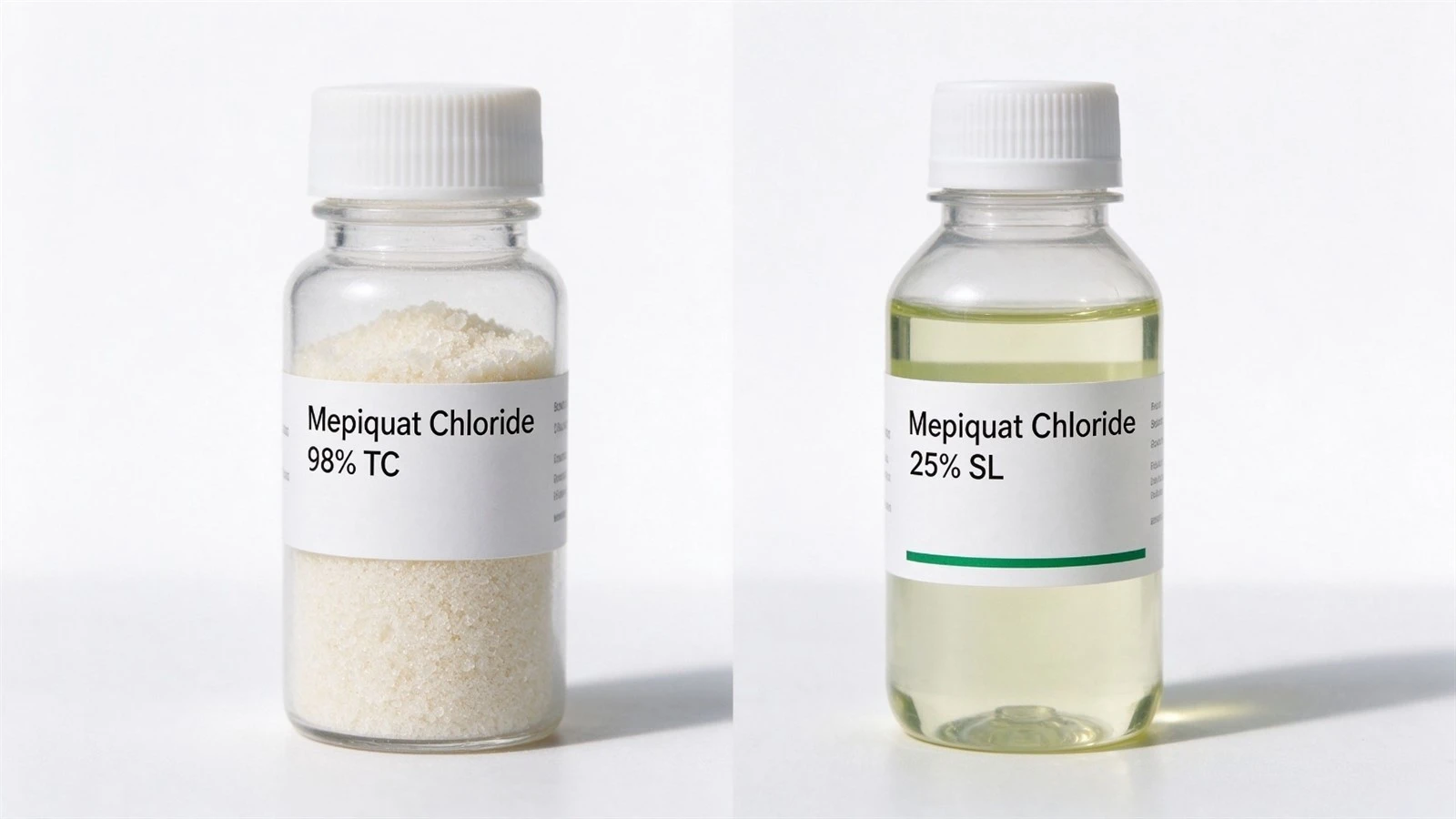
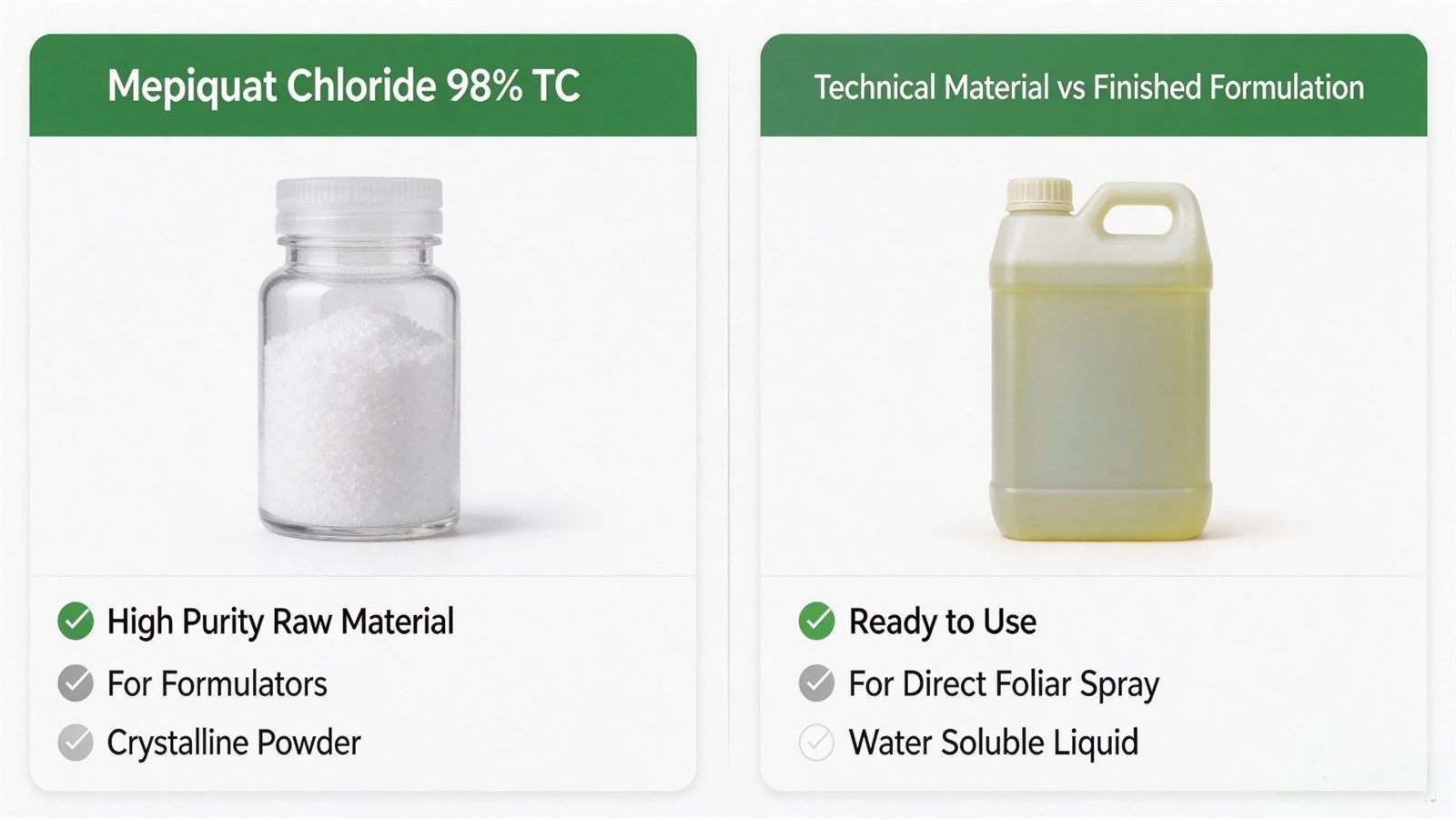
Our portfolio covers two core commercial forms: Mepiquat Chloride 98% TC (Technical Concentrate) and Mepiquat Chloride 25% SL (Soluble Liquid). The 98% TC is a high-purity raw material for agrochemical formulators, while the 25% SL is a ready-to-spray finished formulation for distributors and large-scale farms. This product is designed to balance vegetative and reproductive growth, control rampant shoot elongation, strengthen plant architecture, minimize flower and fruit abscission, reduce lodging risk, and ultimately lift harvest yield and commodity quality. It works as a gibberellin synthesis inhibitor, not a herbicide, fungicide or insecticide, so it will not damage crops when applied following recommended agronomic protocols.
What Is Mepiquat Chloride & Its Mechanism of Action
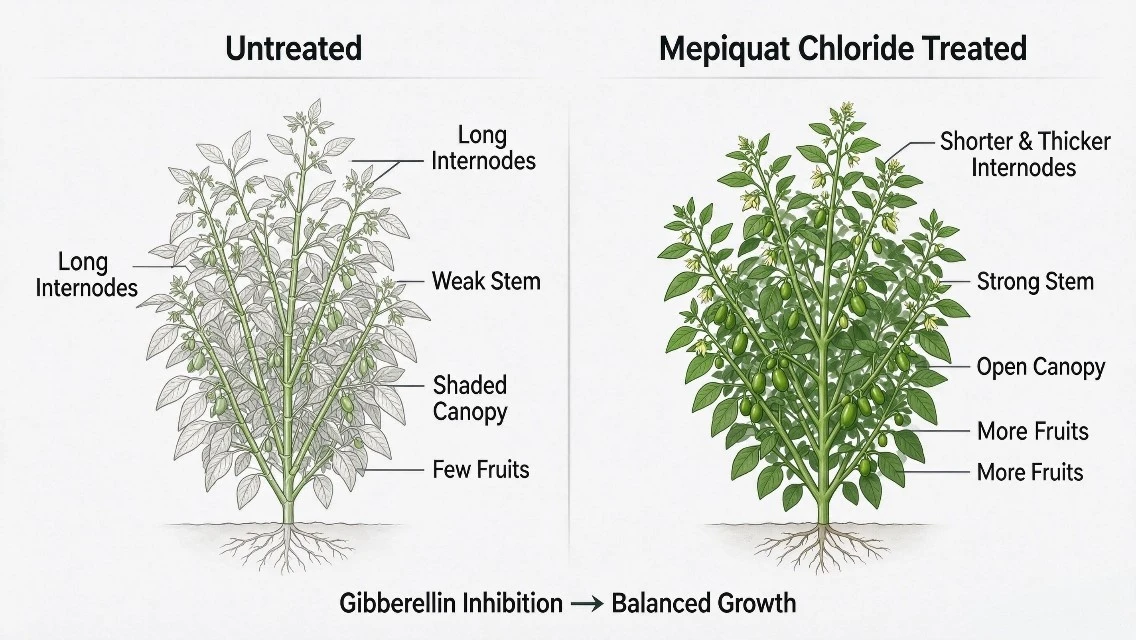
Mepiquat Chloride belongs to the quaternary ammonium plant growth regulator family. Its primary biochemical function is to inhibit the biosynthesis of endogenous gibberellins inside plant tissues. Gibberellins are the key plant hormones that drive cell elongation and internode stretching. When gibberellin production is moderately suppressed, the rate of vertical vegetative growth slows down significantly.
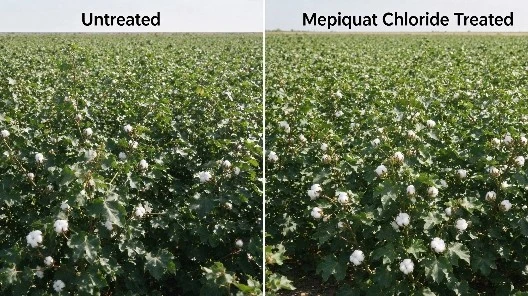
It is critical to understand that Mepiquat Chloride does not kill plant cells or stop growth permanently. It only restrains excessive, unproductive elongation. After proper treatment, crop internodes become shorter and thicker, stems gain higher mechanical strength, and the whole canopy turns more compact and open.
With less energy consumed on tall leafy shoot growth, the photosynthetic assimilates (sugars and nutrients produced by leaves) are redistributed and diverted toward reproductive organs: flower buds, blooms, bolls and young fruits. This nutrient shift stabilizes pollination conditions, lowers the rate of flower and young fruit drop, improves fruit setting, and supports the development of well-filled, high-quality harvest organs.
A well-structured canopy also solves many secondary farm problems: better air circulation inside the crop stand, improved light penetration to lower and inner leaves, reduced humidity within the canopy, and indirectly suppresses the outbreak of humidity-favored diseases such as powdery mildew, botrytis and leaf spot.
Our Available Formulations & Product Specifications
We maintain stable supply of two mainstream formulations to serve different buyer groups, including formulating factories, agrochemical distributors, agricultural cooperatives and large commercial farms. Every batch passes strict laboratory testing and comes with standard supporting documents.
1. Mepiquat Chloride 98% TC (Technical Concentrate)
- Appearance: Off-white to white crystalline powder
- Active ingredient content: ≥98%
- Main application: Raw material for agrochemical manufacturers to process into soluble liquid, water soluble powder and other finished PGR products
- Product features: High purity, low impurity content, stable chemical property under proper storage, good solubility in water, consistent batch-to-batch quality. Bulk packing options for industrial formulation use.
- Target buyers: Formulation plants, raw material importers, chemical blending enterprises
2. Mepiquat Chloride 25% SL (Soluble Liquid)
- Appearance: Clear or light yellow homogeneous liquid
- Active ingredient content: 250 g/L Mepiquat Chloride
- Main application: Direct foliar spray for field crops, vegetables and fruit orchards
- Product features: Fast and complete dissolution in water, no sediment or flocculation after dilution, easy to mix in spray tanks, uniform absorption through leaf cuticles, convenient transportation and on-site operation for farmers
- Target buyers: Distributors, farm input retailers, large planting bases
Core Advantages of Mepiquat Chloride (PIX)
1.Effective control of vigorous vegetative growth
It solves the common headache of over-luxuriant growth caused by rich soil fertility, excessive nitrogen fertilizer, high rainfall and warm weather. Crops will not stretch wildly and form a thick, closed canopy.
2.Strong anti-lodging performance
Shorter internodes and thicker stem cell walls greatly enhance the mechanical stability of plants. This reduces lodging losses during heavy rain, thunderstorms and strong wind periods, which is especially valuable for cotton and trellised vegetables.
3.Promote flower retention and fruit set
By adjusting nutrient allocation, it reduces physiological flower drop and young fruit shedding. More flowers can successfully develop into bolls or marketable fruits, improving the total setting rate.
4.Optimize canopy microclimate
Compact plant architecture lets sunlight penetrate deeper into the canopy, increases the total photosynthetic area, improves air flow and reduces relative humidity inside the crop stand. This helps cut disease pressure and improves pesticide coverage when you run later spray programs.
5.Improve harvest quality and uniformity
For cotton, it promotes even boll development and better boll opening. For fruits, it supports uniform fruit size, better coloration and higher sugar accumulation.
6.Good mixing compatibility
Under most circumstances, Mepiquat Chloride 25% SL can be tank-mixed with common insecticides, fungicides and foliar nutrient fertilizers. It saves farmers extra spraying trips and lowers labor cost. A small compatibility test is always recommended before large-scale mixing.
7.Proven safe track record with proper dosage
PIX has been registered and used across many countries for decades. When applied at the labeled rate and correct growth stage, it shows good crop safety and does not cause phytotoxicity.
Suitable Crops, Application Stages & Usage Guidance
Mepiquat Chloride is globally famous as the standard PGR for cotton management, and it also delivers reliable effects on a wide spectrum of vegetable and fruit crops. Application timing and dosage are the two most critical factors for ideal results. Crop variety, soil fertility, moisture level, nitrogen supply and local temperature will all affect the final performance.
✅ Cotton (Primary Application Crop)
- Purpose: Control vegetative rank growth, balance growth between vegetative branches and fruiting branches, prevent excessive leafy canopy, promote boll formation, increase boll weight and encourage uniform boll opening.
- Suggested application window: Squaring stage, repeat treatment at early bloom stage if the cotton keeps growing vigorously. Avoid late application that may restrict boll development.
- Tip: Reduce dosage for weak cotton plants or cotton grown in poor, dry soil. Increase rate moderately only for highly fertile fields with abundant nitrogen and fast growth.
✅ Vegetable Crops: Tomato, Pepper, Eggplant, Cucumber and Other Vine Vegetables
- Purpose: Restrain vine overgrowth, avoid long, thin vines with few flowers, balance vegetative and reproductive growth, reduce blossom drop, improve fruit setting.
- Suggested application window: Before flowering or at early flowering stage, apply when vines start showing excessive stretching. Do not spray on seedlings at the sensitive cotyledon stage.
✅ Fruit Crops: Apple, Citrus, Grape
- Purpose: Suppress rapid new shoot flush growth, reduce vigorous water sprouts, facilitate flower bud differentiation, stabilize fruit set after blossom, cut down the energy consumption of useless new shoots.
- Suggested application window: Active new shoot growing period. Stop spraying close to fruit ripening stage.
General Important Application Principles
- Never overdose: Over-application will cause excessive growth suppression, stunted plants, smaller leaf size and suppressed fruit development.
- Uniform foliar spray: Spray solution evenly on both upper and lower leaf surfaces; good coverage matters more than heavy dosage.
- Avoid harsh weather: Do not spray under extreme high temperature, drought stress or heavy rain forecast. Rain within 4–6 hours after spraying will reduce efficacy and may require re-spray.
- Adjust with nitrogen management: If farmers apply large amounts of nitrogen fertilizer, the crop growth momentum will be stronger, and the PIX program needs corresponding adjustment.
- Do not mix with strong alkaline agrochemicals: Alkaline conditions can degrade the active ingredient and weaken the effect.
Q1: What is the difference between Mepiquat Chloride (PIX) and Prohexadione Calcium?
A: Both are gibberellin inhibitors used for growth control and anti-lodging, but they have clear differences in market positioning and crop suitability. Mepiquat Chloride (PIX) is the classic choice for cotton, with decades of field data around the world. It is widely accepted by cotton growers, stable in effect and easy to use. Prohexadione Calcium is more commonly used on rice, apple orchards and grape vines for shoot control and lodging prevention. Their residual period, absorption pathway and sensitive crop varieties are not the same. Many distributors stock both products to cover different crop segments.
Q2: Can I mix Mepiquat Chloride 25% SL with foliar fertilizer and insecticides in one tank?
A: Tank mixing is feasible in most scenarios and helps growers save labor and fuel cost. However, we strongly recommend running a small jar test first: mix all planned products in the correct dilution ratio, stand for 30 minutes and check for precipitation, oil separation or flocculation. If abnormal phenomena appear, do not mix them. Keep away from lime sulfur, Bordeaux mixture and other strong alkaline agents.
Q3: What are the storage requirements for Mepiquat Chloride 98% TC powder?
A: Store the product in a cool, dry, well-ventilated warehouse. Keep packages tightly sealed, away from direct sunlight, heat sources and open flame. Separate storage from food, feed, seeds and domestic supplies. Keep out of reach of children, livestock and poultry. Under proper storage conditions, the shelf life can reach 2 years.
Q4: What documents can you provide for import customs clearance?
A: We support bulk and customized packaging. Each shipment can provide COA (Certificate of Analysis), MSDS, technical data sheet, packing list, commercial invoice and other required files according to the import requirements of your country. We can also support third-party inspection if needed.
Q5: Will Mepiquat Chloride leave harmful residues on fruits and vegetables?
A: When applied strictly following local official label instructions, dosage and pre-harvest interval rules, the residue level complies with international food safety standards. Buyers must check and follow the registration regulations and MRL requirements in their target market before promotion and sale.