HYH is a specialized organization combining Agrochemicals, Plant Growth Regulators, Fungicide, Insecticide, Herbicide, Fertilizers, Fine Chemicals, import& export trading and commercial as a whole. Insecticides are chemicals used to control insects by killing them or preventing them from engaging in undesirable or destructive behaviors.
-
![Chlorantraniliprole 3-bromo-n 500008-45-7]() Chlorantraniliprole 3-bromo-n 500008-45-7Chlorantraniliprole is a new type of insecticide, and it has high activity against larvae of Lepidoptera pests, wide insecticidal spectrum and good persistence. It has a longer and more stable protective effect on crops than the vastread more
Chlorantraniliprole 3-bromo-n 500008-45-7Chlorantraniliprole is a new type of insecticide, and it has high activity against larvae of Lepidoptera pests, wide insecticidal spectrum and good persistence. It has a longer and more stable protective effect on crops than the vastread more -
![Insecticide Abamectin 5%EC]() Insecticide Abamectin 5%ECInsecticide Abamectin 5%EC is a class of compounds known for their insecticidal, acaricidal, and nematicidal properties. In today's pesticide market, biopesticides have gained significant attention, and the abamectin stands out as one ofread more
Insecticide Abamectin 5%ECInsecticide Abamectin 5%EC is a class of compounds known for their insecticidal, acaricidal, and nematicidal properties. In today's pesticide market, biopesticides have gained significant attention, and the abamectin stands out as one ofread more -
![75%WDG Thiamethoxam Insecticide For Agriculture]() 75%WDG Thiamethoxam Insecticide For AgricultureThiamethoxam is a novel low-toxicity nicotinoid insecticide with dual effects of stomach toxicity, contact killing and systemic absorption. After application, the pesticide can be rapidly absorbed by the roots or leaves of crops andread more
75%WDG Thiamethoxam Insecticide For AgricultureThiamethoxam is a novel low-toxicity nicotinoid insecticide with dual effects of stomach toxicity, contact killing and systemic absorption. After application, the pesticide can be rapidly absorbed by the roots or leaves of crops andread more -
![Agricultural Imidacloprid Insecticides 50%WP]() Agricultural Imidacloprid Insecticides 50%WPImidacloprid is an insecticide used to control rice planthoppers in rice fields. It has a particularly good control effect on sucking pests.read more
Agricultural Imidacloprid Insecticides 50%WPImidacloprid is an insecticide used to control rice planthoppers in rice fields. It has a particularly good control effect on sucking pests.read more -
![Abamectin 1.8% EC Acaricide Supplier]() Abamectin 1.8% EC Acaricide SupplierAbamectin 1.8% EC Acaricide Supplier has stomach toxicity and contact killing effects. It has a certain degree of plant endoscopicity and can be conducted through the parenchyma tissue of plants. Its mechanism of action is to stimulate theread more
Abamectin 1.8% EC Acaricide SupplierAbamectin 1.8% EC Acaricide Supplier has stomach toxicity and contact killing effects. It has a certain degree of plant endoscopicity and can be conducted through the parenchyma tissue of plants. Its mechanism of action is to stimulate theread more -
![Agricultural Flonicamid 50% WDG Insecticide]() Agricultural Flonicamid 50% WDG InsecticideAgricultural Flonicamid 50% WDG 158062-67-0 insecticide is an insect food rejection agent. After insects consume it, they refuse to eat and die. It has permeability within plants and has a very good control effect on aphids on peach trees.read more
Agricultural Flonicamid 50% WDG InsecticideAgricultural Flonicamid 50% WDG 158062-67-0 insecticide is an insect food rejection agent. After insects consume it, they refuse to eat and die. It has permeability within plants and has a very good control effect on aphids on peach trees.read more -
![Inhibit Pest Growth Isofenphos-methyl 35%EC,50%EC CAS No. 99675 - 03 - 3 For Cotton And Potato.]() Inhibit Pest Growth Isofenphos-methyl 35%EC,50%EC CAS No....Both 35% EC and 50% EC of Isofenphos-methyl are organophosphorus emulsifiable concentrate insecticides. They inhibit the nervous system of pests and exert insecticidal effects through contact toxicity, stomach toxicity and certain systemicread more
Inhibit Pest Growth Isofenphos-methyl 35%EC,50%EC CAS No....Both 35% EC and 50% EC of Isofenphos-methyl are organophosphorus emulsifiable concentrate insecticides. They inhibit the nervous system of pests and exert insecticidal effects through contact toxicity, stomach toxicity and certain systemicread more -
![To Prevent And Control Crop Diseases And Pests Benzyl Benzoate 99%TC 99.5%TC CAS No. 120-51-4 For Cotton And Cit]() To Prevent And Control Crop Diseases And Pests Benzyl Ben...Benzyl Benzoate 99% TC (Technical Concentrate) and 99.5% TC have a wide range of applications in the agricultural field. They serve as core raw materials for formulating crop pest control agents, which can paralyze and kill pests such asread more
To Prevent And Control Crop Diseases And Pests Benzyl Ben...Benzyl Benzoate 99% TC (Technical Concentrate) and 99.5% TC have a wide range of applications in the agricultural field. They serve as core raw materials for formulating crop pest control agents, which can paralyze and kill pests such asread more -
![Bacillus Thuringiensis 32000IU/mg WP Powder]() Bacillus Thuringiensis 32000IU/mg WP PowderBacillus Thuringiensis 32000IU/mg WP Powder is a biogenic insecticide. The main effect is stomach toxicity. It is mainly used for controlling various pests of Lepidoptera. Bacillus thuringiensis can produce endotoxins (i.e., companionread more
Bacillus Thuringiensis 32000IU/mg WP PowderBacillus Thuringiensis 32000IU/mg WP Powder is a biogenic insecticide. The main effect is stomach toxicity. It is mainly used for controlling various pests of Lepidoptera. Bacillus thuringiensis can produce endotoxins (i.e., companionread more -
![Bacillus Thuringiensis 8000IU/mg SC Insecticide]() Bacillus Thuringiensis 8000IU/mg SC InsecticideBacillus thuringiensis is a Gram-positive bacterium. It is mainly used as a low-toxicity insecticide for microbial sources to control various pests such as Lepidoptera, Coleoptera, Hymenoptera, Diptera and Orthoptera.read more
Bacillus Thuringiensis 8000IU/mg SC InsecticideBacillus thuringiensis is a Gram-positive bacterium. It is mainly used as a low-toxicity insecticide for microbial sources to control various pests such as Lepidoptera, Coleoptera, Hymenoptera, Diptera and Orthoptera.read more -
![Highly Effective in Insect Killing Spinosad 10%SC CAS No.131929-60-7 For Apple And Pear.]() Highly Effective in Insect Killing Spinosad 10%SC CAS No....Spinosad 10% SC is a high-performance bio-derived suspension concentrate pesticide with spinosad as the active ingredient, produced by the fermentation of Saccharopolyspora spinosa, and it is an environmentally friendly pest controlread more
Highly Effective in Insect Killing Spinosad 10%SC CAS No....Spinosad 10% SC is a high-performance bio-derived suspension concentrate pesticide with spinosad as the active ingredient, produced by the fermentation of Saccharopolyspora spinosa, and it is an environmentally friendly pest controlread more -
![Effective Bactericidal Action Spinosad 92%TC,1%WP,5%WP,10%WP,CAS No.131929-60-7 For Rice And Cotton.]() Effective Bactericidal Action Spinosad 92%TC,1%WP,5%WP,10...Spinosad is a low-toxicity, environmentally friendly biological insecticide that works by disrupting the insect nervous system and is highly effective against lepidopteran larvae, thrips, and more. The 1%, 5%, and 10% WP (wettable powders)read more
Effective Bactericidal Action Spinosad 92%TC,1%WP,5%WP,10...Spinosad is a low-toxicity, environmentally friendly biological insecticide that works by disrupting the insect nervous system and is highly effective against lepidopteran larvae, thrips, and more. The 1%, 5%, and 10% WP (wettable powders)read more


Why Choose Us
Broad Market
We maintain robust partnerships with numerous renowned chemical manufacturing facilities across China. Our products are exported to Europe, the Americas, Southeast Asia, and Africa, thereby establishing a global market presence.
Accept ODM/OEM Service
When you put forward your needs, our engineers will provide you with faster and more perfect customized solutions. We have a wide range of products, and we will provide technical support according to your actual needs to choose the right product for you.
Advanced Equipment
We have excellent production facilities and perfect checking-ways, which sustain us powerful development and stable economic index growth.
Complete Qualifications
To actively participate in market competition and align with international supervisory standards, the company obtained ISO 9001:2000 certification in 2003.
Insecticides are agents of chemical or biological origin that control insects. Control may result from killing the insect or otherwise preventing it from engaging in behaviors deemed destructive. Insecticides may be natural or manmade and are applied to target pests in a myriad of formulations and delivery systems.

Specifications of Insecticide
|
Classification |
Insecticide |
|
Other Names |
Lambda-cyhalothrin |
|
MF |
C23H19ClF3NO3 |
|
State |
Liquid |
|
Application |
Pest control |
|
Brand Name |
HYH |
|
Classification |
Insecticde |
|
Formulation |
25%EC 40%EC 57%EC |
|
Color |
Dark Brown Sticky Liquid |
|
Shelf Life |
2 years |
|
Package |
Customized |
Functions of Insecticide


Insecticides can increase yields, improving production & income
They are a simple and effective way of controlling pest populations that would otherwise lead to the damage of crops. Without insecticides, large portions of cultivated crops would be lost, leading to a loss of income for the farmers, and also a waste of the resources that were used to grow the crops.
Insecticides improve the quality of crops
Consumers expect to get pest-free fruits and vegetables and insecticides directly play a role in ensuring the crop quality isn't hampered by insects. Controlling insects also controls some plant diseases that are spread by insects which can lead to deterioration in the quality.
Insecticides can provide quick pest control
Insecticides make it possible to control pests quickly. Even when there is a high population of damaging pests, in most cases insecticides can be used to reduce the pests within hours.
Insecticides can provide protection against multiple pest species
Some insecticides provide broad-spectrum protection and some insecticides can be used in combination with another which makes it possible to control many pest species at the same time.
Insecticides are constantly developed to provide protection even against new pest species
As pests evolve, we continue to do research to improve insecticides. Chemical insecticides can be formulated relatively quickly to provide protection sooner than other alternative methods of pest control.
Insecticide Safety Tips

1. Before applying a pesticide, remove children, toys and pets from the area and keep them away until the pesticide has dried or as recommended by the label.
2. Remove or cover food during indoor applications.
3. Don't spray outdoors on windy or rainy days. Take precautions to keep the pesticide from drifting or running off into the vegetable garden, pool or neighbor's yard.
4. If using a commercial applicator or lawn care service, ask for information about potential risks and safety precautions to take.
5. Don't buy more pesticides than you will need. If you have leftover pesticides, check with your local government to determine whether your community has a household hazardous waste collection program or other program for disposing of pesticides.
Storage Temperature
The normal temperature range recommended for storing liquid pesticides is usually 40 to 100 degrees F.
Some pesticide labels state the specific temperature range for maintaining optimal storage shelf life.
Temperature extremes in the pesticide storage facility can potentially pose several problems.
Packing & Delivery

Lead Time
|
Quantity (kilograms) |
1 - 1000 |
>1000 |
|
Lead time (days) |
7 |
To be negotiated |
Certificate

FAQ
We're well-known as one of the leading insecticide manufacturers and suppliers in China. Please feel free to buy high quality insecticide made in China here from our factory. For price consultation, contact us.
insecticide for shrub pests, flea insecticide, insecticide for rabbit pest control-
![A-naphthylacetic Acid NAA Naphthalene 86-87-3]() A-naphthylacetic Acid NAA Naphthalene 86-87-3NAA is an organic compound that is a plant hormone auxin commonly used in commercial rooting powders or agents, and isread more
A-naphthylacetic Acid NAA Naphthalene 86-87-3NAA is an organic compound that is a plant hormone auxin commonly used in commercial rooting powders or agents, and isread more -
![IAA Indolent-3-acetic Acid 87-51-4]() IAA Indolent-3-acetic Acid 87-51-4Indole-3-acetic acid, IAA is one of the auxins, which together with the gibberellins and abscisic acid, cyto- kininsread more
IAA Indolent-3-acetic Acid 87-51-4Indole-3-acetic acid, IAA is one of the auxins, which together with the gibberellins and abscisic acid, cyto- kininsread more -
![Chlorantraniliprole 3-bromo-n 500008-45-7]() Chlorantraniliprole 3-bromo-n 500008-45-7Chlorantraniliprole is a new type of insecticide, and it has high activity against larvae of Lepidoptera pests, wideread more
Chlorantraniliprole 3-bromo-n 500008-45-7Chlorantraniliprole is a new type of insecticide, and it has high activity against larvae of Lepidoptera pests, wideread more -
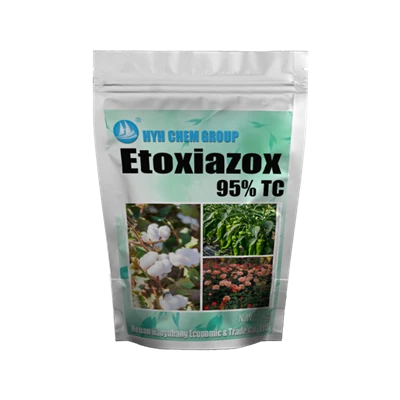
![Etoxazole 95% TC & 20% WP Acaricide | High Purity Agri Fungicide | CAS 153233-91-1 | One Of Leading Manufacturers in China]() Etoxazole 95% TC & 20% WP Acaricide | High Purity Agri Fungicide | CAS 153233...Etoxazole belongs to the class of chitin synthesis inhibitors. It acts by inhibiting chitin biosynthesis in mites,read more
Etoxazole 95% TC & 20% WP Acaricide | High Purity Agri Fungicide | CAS 153233...Etoxazole belongs to the class of chitin synthesis inhibitors. It acts by inhibiting chitin biosynthesis in mites,read more -
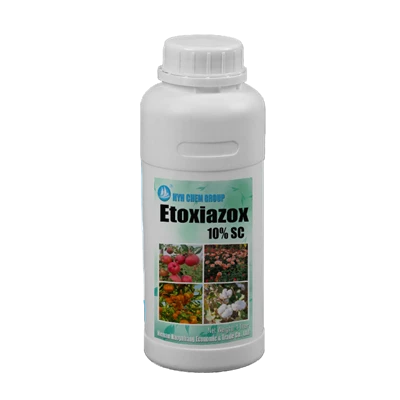
![Etoxazole 10% SC 30% SC – Highly Effective Ovicide & Larvicide Miticide For Mite Control in Agriculture]() Etoxazole 10% SC 30% SC – Highly Effective Ovicide & Larvicide Miticide For M...Etoxazole belongs to the class of diphenyl oxazoline derivatives and acts as an inhibitor of chitin synthesis. Itread more
Etoxazole 10% SC 30% SC – Highly Effective Ovicide & Larvicide Miticide For M...Etoxazole belongs to the class of diphenyl oxazoline derivatives and acts as an inhibitor of chitin synthesis. Itread more -
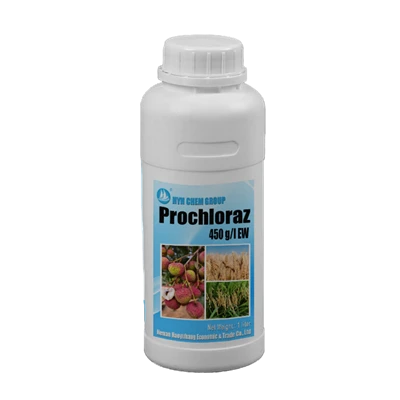
![Prochloraz 250g/L EC 450g/L EW Fungicide | Broad-Spectrum Systemic Activity | Highly Effective For Anthracnose, Bakanae & Scab | Agrochemical Formulation]() Prochloraz 250g/L EC 450g/L EW Fungicide | Broad-Spectrum Systemic Activity |...Prochloraz is a broad-spectrum, highly effective imidazole fungicide with both protective and curative activity. Itread more
Prochloraz 250g/L EC 450g/L EW Fungicide | Broad-Spectrum Systemic Activity |...Prochloraz is a broad-spectrum, highly effective imidazole fungicide with both protective and curative activity. Itread more