HYH is a specialized organization combining Agrochemicals, Plant Growth Regulators, Fungicide, Insecticide, Herbicide, Fertilizers, Fine Chemicals, import& export trading and commercial as a whole. Many farmers choose to use Agrochemicals to keep weeds and pests from destroying their crops and to add more nutrients to the soil.
-
![A-naphthylacetic Acid NAA Naphthalene 86-87-3]() A-naphthylacetic Acid NAA Naphthalene 86-87-3NAA is an organic compound that is a plant hormone auxin commonly used in commercial rooting powders or agents, and is used when plants are propagated using cuttings. a-naphthylacetic acid can also be used for plant tissue culture.read more
A-naphthylacetic Acid NAA Naphthalene 86-87-3NAA is an organic compound that is a plant hormone auxin commonly used in commercial rooting powders or agents, and is used when plants are propagated using cuttings. a-naphthylacetic acid can also be used for plant tissue culture.read more -
![IAA Indolent-3-acetic Acid 87-51-4]() IAA Indolent-3-acetic Acid 87-51-4Indole-3-acetic acid, IAA is one of the auxins, which together with the gibberellins and abscisic acid, cyto- kinins and ethylene are hormones regulating the growth and development of plants.read more
IAA Indolent-3-acetic Acid 87-51-4Indole-3-acetic acid, IAA is one of the auxins, which together with the gibberellins and abscisic acid, cyto- kinins and ethylene are hormones regulating the growth and development of plants.read more -
![Chlorantraniliprole 3-bromo-n 500008-45-7]() Chlorantraniliprole 3-bromo-n 500008-45-7Chlorantraniliprole is a new type of insecticide, and it has high activity against larvae of Lepidoptera pests, wide insecticidal spectrum and good persistence. It has a longer and more stable protective effect on crops than the vastread more
Chlorantraniliprole 3-bromo-n 500008-45-7Chlorantraniliprole is a new type of insecticide, and it has high activity against larvae of Lepidoptera pests, wide insecticidal spectrum and good persistence. It has a longer and more stable protective effect on crops than the vastread more -
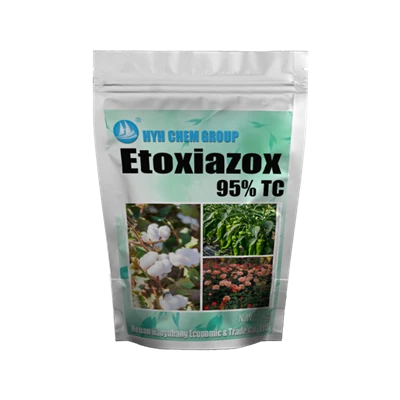
![Etoxazole 95% TC & 20% WP Acaricide | High Purity Agri Fungicide | CAS 153233-91-1 | One Of Leading Manufacturers in China]() Etoxazole 95% TC & 20% WP Acaricide | High Purity Agri Fu...Etoxazole belongs to the class of chitin synthesis inhibitors. It acts by inhibiting chitin biosynthesis in mites, thereby preventing the formation of a new cuticle during the molting process, which ultimately leads to their death.read more
Etoxazole 95% TC & 20% WP Acaricide | High Purity Agri Fu...Etoxazole belongs to the class of chitin synthesis inhibitors. It acts by inhibiting chitin biosynthesis in mites, thereby preventing the formation of a new cuticle during the molting process, which ultimately leads to their death.read more -
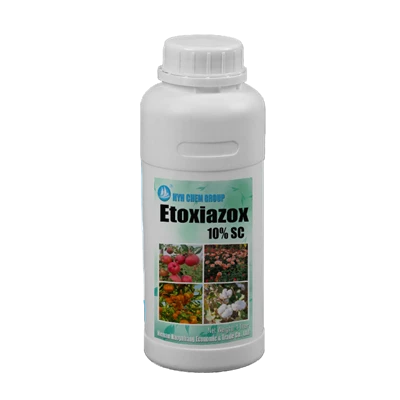
![Etoxazole 10% SC 30% SC – Highly Effective Ovicide & Larvicide Miticide For Mite Control in Agriculture]() Etoxazole 10% SC 30% SC – Highly Effective Ovicide & Larv...Etoxazole belongs to the class of diphenyl oxazoline derivatives and acts as an inhibitor of chitin synthesis. It exerts its acaricidal effects by inhibiting the biosynthesis of chitin in mites, thereby disrupting their normal moltingread more
Etoxazole 10% SC 30% SC – Highly Effective Ovicide & Larv...Etoxazole belongs to the class of diphenyl oxazoline derivatives and acts as an inhibitor of chitin synthesis. It exerts its acaricidal effects by inhibiting the biosynthesis of chitin in mites, thereby disrupting their normal moltingread more -
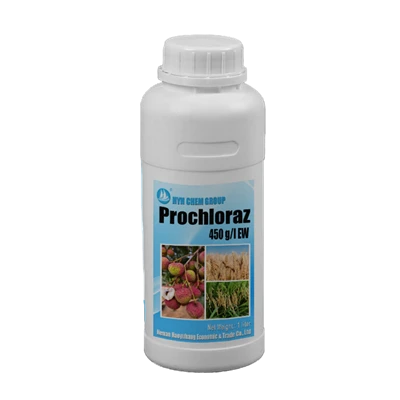
![Prochloraz 250g/L EC 450g/L EW Fungicide | Broad-Spectrum Systemic Activity | Highly Effective For Anthracnose, Bakanae & Scab | Agrochemical Formulation]() Prochloraz 250g/L EC 450g/L EW Fungicide | Broad-Spectrum...Prochloraz is a broad-spectrum, highly effective imidazole fungicide with both protective and curative activity. It works by inhibiting the biosynthesis of ergosterol in fungal cell membranes, disrupting membrane function, and ultimatelyread more
Prochloraz 250g/L EC 450g/L EW Fungicide | Broad-Spectrum...Prochloraz is a broad-spectrum, highly effective imidazole fungicide with both protective and curative activity. It works by inhibiting the biosynthesis of ergosterol in fungal cell membranes, disrupting membrane function, and ultimatelyread more -
![Prochloraz 97% TC 95% TC High Purity Technical Material | Broad Spectrum Fungicide For Rice, Fruits & Vegetables | Agrochemical Raw Material]() Prochloraz 97% TC 95% TC High Purity Technical Material |...Prochloraz is a broad-spectrum, highly effective imidazole fungicide with both protective and curative activity. It works by inhibiting the biosynthesis of ergosterol in fungal cell membranes, leading to cell membrane disruption and fungalread more
Prochloraz 97% TC 95% TC High Purity Technical Material |...Prochloraz is a broad-spectrum, highly effective imidazole fungicide with both protective and curative activity. It works by inhibiting the biosynthesis of ergosterol in fungal cell membranes, leading to cell membrane disruption and fungalread more -
![HYH New Ethylene Fruit Ripening Gas Generator – Simple Operation, Accelerates Mango Ripening, No Residue]() HYH New Ethylene Fruit Ripening Gas Generator – Simple Op...YX-100 series products are the professional manufacturers of earlyfruit and vegetable ripening machines in China. Our company hasprofessional R &D team and manufacturing capacity. After severalyears' efforts, new products have beenread more
HYH New Ethylene Fruit Ripening Gas Generator – Simple Op...YX-100 series products are the professional manufacturers of earlyfruit and vegetable ripening machines in China. Our company hasprofessional R &D team and manufacturing capacity. After severalyears' efforts, new products have beenread more -
![Tebuconazole 430 G/L SC 250 G/L EC– Fungicide For Apple Tree Alternaria Leaf Spot, Wheat Rust, And Downy Mildew]() Tebuconazole 430 G/L SC 250 G/L EC– Fungicide For Apple T...Systemic fungicide with three functions: protection, curative action, and eradication. Tebuconazole can be absorbed by plants and translocated acropetally within plant tissues, both preventing surface pathogens and killing internalread more
Tebuconazole 430 G/L SC 250 G/L EC– Fungicide For Apple T...Systemic fungicide with three functions: protection, curative action, and eradication. Tebuconazole can be absorbed by plants and translocated acropetally within plant tissues, both preventing surface pathogens and killing internalread more -
![Agriculture Fungicide Tebuconazole 80% WP, 97% TC CAS 107534-96-3]() Agriculture Fungicide Tebuconazole 80% WP, 97% TC CAS 107...Tebuconazole inhibits the activity of this enzyme, thereby disrupting the integrity of the fungal cell membrane and suppressing mycelial growth and spore germination, thus achieving its fungicidal effect.read more
Agriculture Fungicide Tebuconazole 80% WP, 97% TC CAS 107...Tebuconazole inhibits the activity of this enzyme, thereby disrupting the integrity of the fungal cell membrane and suppressing mycelial growth and spore germination, thus achieving its fungicidal effect.read more -
![Spiroxamine Fungicide – Broad Spectrum, High Efficiency, Rapid Action 95%SC 500g/l EC 800g/lEC]() Spiroxamine Fungicide – Broad Spectrum, High Efficiency, ...Spiroxamine is a sterol biosynthesis inhibitor that primarily inhibits the synthesis of C-14 demethylase. Some studies also indicate that it has inhibitory effects on δ14 reductase and δ8→δ7 isomerase. By interfering with the biosynthesisread more
Spiroxamine Fungicide – Broad Spectrum, High Efficiency, ...Spiroxamine is a sterol biosynthesis inhibitor that primarily inhibits the synthesis of C-14 demethylase. Some studies also indicate that it has inhibitory effects on δ14 reductase and δ8→δ7 isomerase. By interfering with the biosynthesisread more -
![Biostimulant Pollen Polysaccharides Pollen Extract]() Biostimulant Pollen Polysaccharides Pollen ExtractPollen polysaccharides is an pollen extract that 100% from nature.It is a pure plant endogenous biostimulant. It can be used for greener leaves, thicker stems and larger fruits. It can be added into fertilizer. Residue-free.read more
Biostimulant Pollen Polysaccharides Pollen ExtractPollen polysaccharides is an pollen extract that 100% from nature.It is a pure plant endogenous biostimulant. It can be used for greener leaves, thicker stems and larger fruits. It can be added into fertilizer. Residue-free.read more


Why Choose Us
Broad Market
We maintain robust partnerships with numerous renowned chemical manufacturing facilities across China. Our products are exported to Europe, the Americas, Southeast Asia, and Africa, thereby establishing a global market presence.
Accept ODM/OEM Service
When you put forward your needs, our engineers will provide you with faster and more perfect customized solutions. We have a wide range of products, and we will provide technical support according to your actual needs to choose the right product for you.
Advanced Equipment
We have excellent production facilities and perfect checking-ways, which sustain us powerful development and stable economic index growth.
Complete Qualifications
To actively participate in market competition and align with international supervisory standards, the company obtained ISO 9001:2000 certification in 2003.
Agrochemicals are chemical formulations that are generally used to control pests, pathogens, and supplying nutrients to the soil. Our agrochemicals include insecticide, fungicide, herbicide, plant growth regulator, acaricide, rodenticide, etc. The use of agrochemicals has increased the yield and growth of crop and thus providing stability to the agricultural production.

Specifications of Agrochemicals
|
Classification |
Acaricide |
|
Other Names |
Thiamethoxam |
|
MF |
C8H10ClN5O3S |
|
EINECS No. |
428-650-4 |
|
Application |
Acaricide |
|
Brand Name |
HYH |
|
State |
Powder |
|
Storage |
Keep in cool and dry place |
|
Shelf Life |
2~3 Years Properly Stored |
|
Package |
Customized |
Classification of Agrochemicals


Insecticide
Insecticides are chemicals used to control insects by killing them or preventing them from engaging in undesirable or destructive behaviors. They are classified based on their structure and mode of action. Many insecticides act upon the insect's nervous system (e.g., cholinesterase inhibition), while others act as growth regulators or endotoxins.
Fungicide
Fungicides are pesticides that kill or prevent the growth of fungi and their spores. They can be used to control fungi that damage plants, including rusts, mildews and blights. They might also be used to control mold and mildew in other settings. Fungicides work in a variety of ways, but most of them damage fungal cell membranes or interfere with energy production within fungal cells.
Herbicide
Herbicides can be defined as crop- protecting chemicals used to kill weedy plants or interrupt normal plant growth. Herbicides can be classified several ways, including by weed control spectrum, labeled crop usage, chemical families, mode of action, application timing/ method, and others.
Plant Growth Regulator
Plant growth regulators are important compounds that impact aspects of plant growth such as root, shoot and embryo development. Plants naturally produce and use these; however, researchers often use plant growth regulators in culture media in order to guide events within plant regeneration.
Acaricide
An acaricide or miticide is a pesticide that provides economic control of pest mites and ticks. Mites and ticks are collectively called either acari or acarina. Some products can act as insecticides or fungicides as well as acaricides.
Rodenticide
Rodenticides are pesticides that kill rodents. Rodents include not only rats and mice, but also squirrels, woodchucks, chipmunks, porcupines, nutria, and beavers. Rodenticides have the same effect when eaten by any mammal. They can also affect birds. Rodenticides are usually formulated as baits, which are designed to attract animals.
Functions of Agrochemicals
Agrochemicals enable farmers to yield more crops from per acre of land for a longer period. As they protect crops from pests, disease and weeds ensuring good harvest.
01
It has environmental benefits too as less area can produce huge yields therefore the rate of deforestation is reduced. The sterility of land is also maintained.
02
It will be economically beneficial too. There will be a reduction in cost of food and other stuff due to very good yields.
03
It can lessen the working hours of farmers on agricultural fields and they can get involved in other works too.
04
It will be healthy to be consumed by consumers as the crops will be free from diseases, fungal, bacterial or viral infections. Percentage of contamination will be reduced.
05
Customization
|
Customized labels |
Custom packaging |
Graphic customization |
|
Min. order: 1000 kilogram |
Min. order: 1000 kilogram |
Min. order: 1000 kilogram |
Requirements for Use of Agrochemicals

1. Read the label thoroughly before use.
2. Understand the need, importance and applicability of all preventive measures and use the right personal protective equipment while using any pesticide from a trusted manufacturer.
3. Follow the manufacturer's guidelines and instructions on safe storage, application and disposal of chemicals.
4. For any query or confusion, always consult with an expert.
Storage Conditions
Most pesticide labels call for storage in a "cool, dry" place. For your safety, always provide adequate ventilation and light.
|
1 |
Temperature |
Consult the pesticide label to determine the acceptable limits at which the storage temperature should not exceed or fall. |
|
2 |
Humidity |
Keep the storage area dry. |
|
3 |
Ventilation |
The storage building needs constant ventilation to prevent the buildup of toxic fumes and to reduce humidity. |
|
4 |
Light |
Make sure the storage area is bright enough so that pesticide labels can be read easily. |
Payment Terms
Payment<=1000USD, 100% in advance.
Payment >=1000USD, 30% T/T in advance, balance before shipment. or LC at sight.
Certificate

FAQ
We're well-known as one of the leading agrochemicals manufacturers and suppliers in China. Please feel free to buy high quality agrochemicals made in China here from our factory. For price consultation, contact us.
-
![A-naphthylacetic Acid NAA Naphthalene 86-87-3]() A-naphthylacetic Acid NAA Naphthalene 86-87-3NAA is an organic compound that is a plant hormone auxin commonly used in commercial rooting powders or agents, and isread more
A-naphthylacetic Acid NAA Naphthalene 86-87-3NAA is an organic compound that is a plant hormone auxin commonly used in commercial rooting powders or agents, and isread more -
![IAA Indolent-3-acetic Acid 87-51-4]() IAA Indolent-3-acetic Acid 87-51-4Indole-3-acetic acid, IAA is one of the auxins, which together with the gibberellins and abscisic acid, cyto- kininsread more
IAA Indolent-3-acetic Acid 87-51-4Indole-3-acetic acid, IAA is one of the auxins, which together with the gibberellins and abscisic acid, cyto- kininsread more -
![Chlorantraniliprole 3-bromo-n 500008-45-7]() Chlorantraniliprole 3-bromo-n 500008-45-7Chlorantraniliprole is a new type of insecticide, and it has high activity against larvae of Lepidoptera pests, wideread more
Chlorantraniliprole 3-bromo-n 500008-45-7Chlorantraniliprole is a new type of insecticide, and it has high activity against larvae of Lepidoptera pests, wideread more -
![Etoxazole 95% TC & 20% WP Acaricide | High Purity Agri Fungicide | CAS 153233-91-1 | One Of Leading Manufacturers in China]() Etoxazole 95% TC & 20% WP Acaricide | High Purity Agri Fungicide | CAS 153233...Etoxazole belongs to the class of chitin synthesis inhibitors. It acts by inhibiting chitin biosynthesis in mites,read more
Etoxazole 95% TC & 20% WP Acaricide | High Purity Agri Fungicide | CAS 153233...Etoxazole belongs to the class of chitin synthesis inhibitors. It acts by inhibiting chitin biosynthesis in mites,read more -
![Etoxazole 10% SC 30% SC – Highly Effective Ovicide & Larvicide Miticide For Mite Control in Agriculture]() Etoxazole 10% SC 30% SC – Highly Effective Ovicide & Larvicide Miticide For M...Etoxazole belongs to the class of diphenyl oxazoline derivatives and acts as an inhibitor of chitin synthesis. Itread more
Etoxazole 10% SC 30% SC – Highly Effective Ovicide & Larvicide Miticide For M...Etoxazole belongs to the class of diphenyl oxazoline derivatives and acts as an inhibitor of chitin synthesis. Itread more -
![Prochloraz 250g/L EC 450g/L EW Fungicide | Broad-Spectrum Systemic Activity | Highly Effective For Anthracnose, Bakanae & Scab | Agrochemical Formulation]() Prochloraz 250g/L EC 450g/L EW Fungicide | Broad-Spectrum Systemic Activity |...Prochloraz is a broad-spectrum, highly effective imidazole fungicide with both protective and curative activity. Itread more
Prochloraz 250g/L EC 450g/L EW Fungicide | Broad-Spectrum Systemic Activity |...Prochloraz is a broad-spectrum, highly effective imidazole fungicide with both protective and curative activity. Itread more