HYH is a specialized organization combining Agrochemicals, Plant Growth Regulators, Fungicide, Insecticide, Herbicide, Fertilizers, Fine Chemicals, import& export trading and commercial as a whole. Our chemical fertilizers include humic acid, potassium humate, amino acid, seaweed extract, etc. Chemical fertilizers allow growers to maximize their crop yield on a specific piece of land — the more the plant grows, the better. Fertilizer works to ensure that each piece of land produces as efficiently as possible.
-
![Calcium Formate 98% Powder For Animal Feed & Concrete Accelerator Building Material Calcium Formate CAS 544-17-2]() Calcium Formate 98% Powder For Animal Feed & Concrete Acc...Calcium formate can increase the average daily gain and feed conversion rate of piglets, and is also used in industries such as construction, chemical engineering, and leather tanning, serving as a concrete early-strength agent, mortarread more
Calcium Formate 98% Powder For Animal Feed & Concrete Acc...Calcium formate can increase the average daily gain and feed conversion rate of piglets, and is also used in industries such as construction, chemical engineering, and leather tanning, serving as a concrete early-strength agent, mortarread more -
![Sodium Formate 92% 95% 98% Cas 141-53-7]() Sodium Formate 92% 95% 98% Cas 141-53-7Sodium formate is primarily used in the production of sodium hydrosulfite, oxalic acid, and formic acid. In the leather industry, it serves as a masking acid in chrome tanning processes, as well as a catalyst and stabilizing agent inread more
Sodium Formate 92% 95% 98% Cas 141-53-7Sodium formate is primarily used in the production of sodium hydrosulfite, oxalic acid, and formic acid. In the leather industry, it serves as a masking acid in chrome tanning processes, as well as a catalyst and stabilizing agent inread more -
![Industrial EDTA-MnNa2 Plant Growth Regulator Powder CAS 15375-84-5]() Industrial EDTA-MnNa2 Plant Growth Regulator Powder CAS 1...EDTA-MnNa2 resists soil fixation, maintaining a plant-available form, and is several times more effective than inorganic manganese. It exhibits better mobility in the soil solution, reaching plant roots more efficiently through mass flowread more
Industrial EDTA-MnNa2 Plant Growth Regulator Powder CAS 1...EDTA-MnNa2 resists soil fixation, maintaining a plant-available form, and is several times more effective than inorganic manganese. It exhibits better mobility in the soil solution, reaching plant roots more efficiently through mass flowread more -
![Organic Fertilizer Water-soluble Mixture -EDTA Trace Elements Zn/Fe/Mn/Cu/Mo/Mg EDTA Mixed Powder]() Organic Fertilizer Water-soluble Mixture -EDTA Trace Elem...EDTA-Mix can be safely mixed with phosphate fertilizers, macronutrient water-soluble fertilizers (such as N-P-K formulations), and most non-strongly-alkaline pesticides, making it an ideal choice for fertigation (drip or sprinklerread more
Organic Fertilizer Water-soluble Mixture -EDTA Trace Elem...EDTA-Mix can be safely mixed with phosphate fertilizers, macronutrient water-soluble fertilizers (such as N-P-K formulations), and most non-strongly-alkaline pesticides, making it an ideal choice for fertigation (drip or sprinklerread more -
![EDTA-Co Agricultural Fertilizers Powder]() EDTA-Co Agricultural Fertilizers PowderEDTA-Co protects cobalt ions from being locked by soil particles, maintaining them in a soluble and bioavailable state within the soil solution. This ensures that trace amounts of cobalt can be efficiently absorbed and utilized by legumeread more
EDTA-Co Agricultural Fertilizers PowderEDTA-Co protects cobalt ions from being locked by soil particles, maintaining them in a soluble and bioavailable state within the soil solution. This ensures that trace amounts of cobalt can be efficiently absorbed and utilized by legumeread more -
![EDTA Magnesium Disodium CAS 14402-88-1 EDTA MgNa2]() EDTA Magnesium Disodium CAS 14402-88-1 EDTA MgNa2EDTA MgNa2 remains in a soluble state, facilitating easier uptake by the root system. It can be rapidly transported through the xylem and phloem to new growth tissues and fruits. When used as a foliar fertilizer, EDTA MgNa2 is quicklyread more
EDTA Magnesium Disodium CAS 14402-88-1 EDTA MgNa2EDTA MgNa2 remains in a soluble state, facilitating easier uptake by the root system. It can be rapidly transported through the xylem and phloem to new growth tissues and fruits. When used as a foliar fertilizer, EDTA MgNa2 is quicklyread more -
![EDTA-CaNa2/ EDTA Calcium Disodium With CAS 23411-34-9]() EDTA-CaNa2/ EDTA Calcium Disodium With CAS 23411-34-9Chelating agents (such as EDTA, sugar alcohols, and amino acids) form stable ring-shaped structures with calcium ions, effectively resisting interference from other ions in the soil or fertilizer solution (such as phosphate PO₄³⁻, sulfateread more
EDTA-CaNa2/ EDTA Calcium Disodium With CAS 23411-34-9Chelating agents (such as EDTA, sugar alcohols, and amino acids) form stable ring-shaped structures with calcium ions, effectively resisting interference from other ions in the soil or fertilizer solution (such as phosphate PO₄³⁻, sulfateread more -
![Organic Fertilizer Powder EDTA CuNa2 CAS 14025-15-1]() Organic Fertilizer Powder EDTA CuNa2 CAS 14025-15-1EDTA CuNa₂ is a stable compound formed through coordinate bonds. Its primary function is to prevent and correct copper deficiency in plants, while also serving as a supplement to fungicides or a regulator for plant growth under certainread more
Organic Fertilizer Powder EDTA CuNa2 CAS 14025-15-1EDTA CuNa₂ is a stable compound formed through coordinate bonds. Its primary function is to prevent and correct copper deficiency in plants, while also serving as a supplement to fungicides or a regulator for plant growth under certainread more -
![High Purity Fertilizer EDTA - FeNa]() High Purity Fertilizer EDTA - FeNaEDTA - FeNa effectively resists precipitation caused by ions such as phosphate, carbonate, and hydroxide in the soil. The iron remains in a form readily absorbable by plants, exhibits good mobility within the soil solution and inside theread more
High Purity Fertilizer EDTA - FeNaEDTA - FeNa effectively resists precipitation caused by ions such as phosphate, carbonate, and hydroxide in the soil. The iron remains in a form readily absorbable by plants, exhibits good mobility within the soil solution and inside theread more -
![EDTA ZnNa2 Agricultural Fertilizers Powder CAS 14025-21-9]() EDTA ZnNa2 Agricultural Fertilizers Powder CAS 14025-21-9EDTA ZnNa₂ is a compound in which a zinc ion is bound to the specific organic chelating agent EDTA (ethylenediaminetetraacetic acid) through coordinate covalent bonds. In this structure, the chelator firmly encapsulates the zinc ion, akinread more
EDTA ZnNa2 Agricultural Fertilizers Powder CAS 14025-21-9EDTA ZnNa₂ is a compound in which a zinc ion is bound to the specific organic chelating agent EDTA (ethylenediaminetetraacetic acid) through coordinate covalent bonds. In this structure, the chelator firmly encapsulates the zinc ion, akinread more -
![EDDHA Fe 6% Micronutrients Fertilizer Agricultural Fertilizer EDDHA Fe 6%CAS 16455-61-1]() EDDHA Fe 6% Micronutrients Fertilizer Agricultural Fertil...EDDHA Fe 6% is particularly effective against interveinal chlorosis (where leaf veins remain green while the tissue between them turns yellow) caused by iron fixation in high-pH soils, which renders the iron unavailable for plant uptake.read more
EDDHA Fe 6% Micronutrients Fertilizer Agricultural Fertil...EDDHA Fe 6% is particularly effective against interveinal chlorosis (where leaf veins remain green while the tissue between them turns yellow) caused by iron fixation in high-pH soils, which renders the iron unavailable for plant uptake.read more -
![Improve Soil Structure Humic Acid 40%,45%,50%,60%,65% CAS No.1415-93-6 For Chili And Pepper]() Improve Soil Structure Humic Acid 40%,45%,50%,60%,65% CAS...40% Humic Acid: A basic version that improves soil structure, enhances water and fertilizer retention capacity, and promotes microbial activity. Suitable for daily maintenance of plots with poor soil quality, helping crops growread more
Improve Soil Structure Humic Acid 40%,45%,50%,60%,65% CAS...40% Humic Acid: A basic version that improves soil structure, enhances water and fertilizer retention capacity, and promotes microbial activity. Suitable for daily maintenance of plots with poor soil quality, helping crops growread more


Why Choose Us
Broad Market
We maintain robust partnerships with numerous renowned chemical manufacturing facilities across China. Our products are exported to Europe, the Americas, Southeast Asia, and Africa, thereby establishing a global market presence.
Accept ODM/OEM Service
When you put forward your needs, our engineers will provide you with faster and more perfect customized solutions. We have a wide range of products, and we will provide technical support according to your actual needs to choose the right product for you.
Advanced Equipment
We have excellent production facilities and perfect checking-ways, which sustain us powerful development and stable economic index growth.
Complete Qualifications
To actively participate in market competition and align with international supervisory standards, the company obtained ISO 9001:2000 certification in 2003.
Introduction To Chemical Fertilizers
Chemical fertilizers are synthetic compounds that are added to soil in order to provide essential nutrients to plants. They are typically made from a combination of nitrogen, phosphorus, and potassium, as well as other trace elements that are necessary for plant growth.
Classification of Chemical Fertilizers


Humic Acid Nitrohumic Acid Humic Humification 1415-93-6
Humic acid is a type of organic substance formed and accumulated from animal and plant remains, mainly plant remains, through microbial decomposition and transformation, as well as a series of geochemical processes. Nitrohumic acid can be used as an acid regulator for rice seedling cultivation.
Potassium Humic Humate 68514-28-3
Potassium humate is a highly efficient organic potassium fertilizer because the humic acid in it is a biologically active agent that can increase the available potassium content in the soil, reduce the loss and fixation of potassium, increase the absorption and utilization of potassium by crops, and also improve the soil. , promote crop growth, improve crop stress resistance, improve crop quality, protect the agricultural ecological environment and other functions.
Amino Acid
Amino acids are important organic molecules in organisms that can participate in building cell structures, regulating metabolic processes of organisms, and transmitting signals.
Seaweed Extract
The seaweed extract fertilizer has remarkable functions in promoting cell division, anti-stress, anti-plant diseases and insect pests, increasing yield, regulating growth and improving soil condition and so on. Meanwhile, it can comply with requirement of producing green organic food because of its high efficiency and safety.
Specifications of Chemical Fertilizers
|
Classification |
Biological Fertilizer |
|
Other Names |
Humic Acid |
|
MF |
C9H8K2O4 |
|
EINECS No. |
215-809-6 |
|
Application |
Organic Fertilizer |
|
Brand Name |
HYH |
|
Quality |
High Effective |
|
Shelf Life |
2 years |
|
Package |
Customized |
|
Color |
Black |
Functions of Chemical Fertilizers
Higher production per hectare
Chemical fertilizers improve the spaces and surfaces available for agricultural work. Because of their high contribution of macronutrients, these can encourage higher yields per hectare sowed and help plants develop to their full potential. These fertilizers, in addition to boosting nutrient absorption from the soil, increase the depth of the roots by up to one meter: as a result, the plants are considerably stronger and can be fully supplied by the under-ground waters.
Soil adjustment
Different soil elements, such as very low or high acidity levels, can be adjusted through the application or usage of fertilizers that complement other chemicals and procedures, such as liming. In addition to other natural and environmentally friendly products, the moderate and conscious use of these products helps agricultural soils preserve their quality and fertility for fresh production cycles.
Reaction to critical cultivation scenarios
When severe crop problems arise and plants do not appear to be developing properly, chemical fertilizers might provide an immediate answer. Through foliar treatments, N-P-K fertilizers – which include nitrogen, phosphorous, and potassium – can boost the health and expectations of plants in advanced stages of cultivation. This practice consists of diluting the fertilizer in water to propagate it directly in the area of the plant.
Adaptability to specific needs
These fertilizers have distinct chemical features as well as accurate indices of various nutrients, substances, and values. As a result, you can find items tailored to your demands on the market, with precise values and features to fulfill your needs in specific scenarios or stages of the cycles.
- Take steps to avoid direct contact of fertiliser products with skin and eyes.
- The corrosive nature of fertiliser can irritate skin especially where there are cuts or grazes.
- Always use protective gloves.
- It is also good practice to wear a dust mask as the dust from fertilisers can also be a problem.

Packing & Delivery

After Sales Service
We provide 5 hours response after customer complaint;
If quality not satisfied, we guarantee 100% payment returned, and we bear all the lost;
Good changed or returned accepted.
Certificate

FAQ
We're well-known as one of the leading chemical fertilizers manufacturers and suppliers in China. Please feel free to buy high quality chemical fertilizers made in China here from our factory. For price consultation, contact us.
fertilizer for vertical farming, fertilizer for irrigated farming, fertilizer for apples-
![A-naphthylacetic Acid NAA Naphthalene 86-87-3]() A-naphthylacetic Acid NAA Naphthalene 86-87-3NAA is an organic compound that is a plant hormone auxin commonly used in commercial rooting powders or agents, and isread more
A-naphthylacetic Acid NAA Naphthalene 86-87-3NAA is an organic compound that is a plant hormone auxin commonly used in commercial rooting powders or agents, and isread more -
![IAA Indolent-3-acetic Acid 87-51-4]() IAA Indolent-3-acetic Acid 87-51-4Indole-3-acetic acid, IAA is one of the auxins, which together with the gibberellins and abscisic acid, cyto- kininsread more
IAA Indolent-3-acetic Acid 87-51-4Indole-3-acetic acid, IAA is one of the auxins, which together with the gibberellins and abscisic acid, cyto- kininsread more -
![Chlorantraniliprole 3-bromo-n 500008-45-7]() Chlorantraniliprole 3-bromo-n 500008-45-7Chlorantraniliprole is a new type of insecticide, and it has high activity against larvae of Lepidoptera pests, wideread more
Chlorantraniliprole 3-bromo-n 500008-45-7Chlorantraniliprole is a new type of insecticide, and it has high activity against larvae of Lepidoptera pests, wideread more -
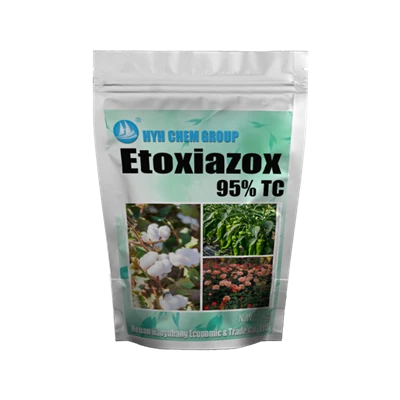
![Etoxazole 95% TC & 20% WP Acaricide | High Purity Agri Fungicide | CAS 153233-91-1 | One Of Leading Manufacturers in China]() Etoxazole 95% TC & 20% WP Acaricide | High Purity Agri Fungicide | CAS 153233...Etoxazole belongs to the class of chitin synthesis inhibitors. It acts by inhibiting chitin biosynthesis in mites,read more
Etoxazole 95% TC & 20% WP Acaricide | High Purity Agri Fungicide | CAS 153233...Etoxazole belongs to the class of chitin synthesis inhibitors. It acts by inhibiting chitin biosynthesis in mites,read more -
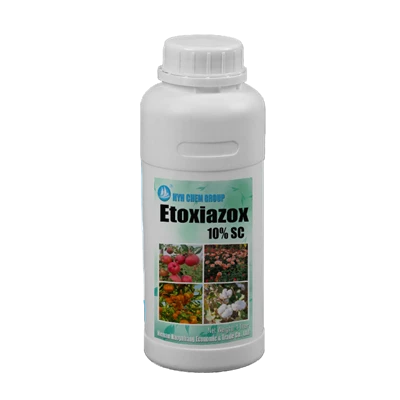
![Etoxazole 10% SC 30% SC – Highly Effective Ovicide & Larvicide Miticide For Mite Control in Agriculture]() Etoxazole 10% SC 30% SC – Highly Effective Ovicide & Larvicide Miticide For M...Etoxazole belongs to the class of diphenyl oxazoline derivatives and acts as an inhibitor of chitin synthesis. Itread more
Etoxazole 10% SC 30% SC – Highly Effective Ovicide & Larvicide Miticide For M...Etoxazole belongs to the class of diphenyl oxazoline derivatives and acts as an inhibitor of chitin synthesis. Itread more -
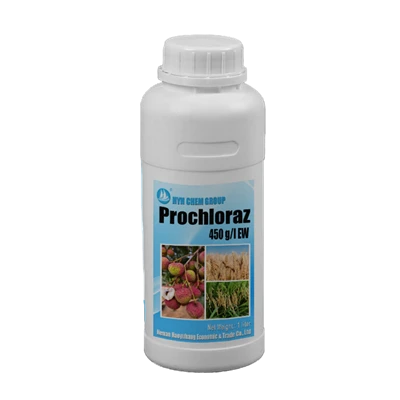
![Prochloraz 250g/L EC 450g/L EW Fungicide | Broad-Spectrum Systemic Activity | Highly Effective For Anthracnose, Bakanae & Scab | Agrochemical Formulation]() Prochloraz 250g/L EC 450g/L EW Fungicide | Broad-Spectrum Systemic Activity |...Prochloraz is a broad-spectrum, highly effective imidazole fungicide with both protective and curative activity. Itread more
Prochloraz 250g/L EC 450g/L EW Fungicide | Broad-Spectrum Systemic Activity |...Prochloraz is a broad-spectrum, highly effective imidazole fungicide with both protective and curative activity. Itread more