HYH is a large-scale agricultural group and state key pesticide enterprise, which is located in the cradle of Tai-ji Quan, Henan Province, China. As a specialized organization combining Agrochemicals, Plant Growth Regulators, Fungicide, Insecticide, Herbicide, Fertilizers, Fine Chemicals, import& export trading and commercial as a whole. In agriculture, fungicides are used to protect tubers, fruits, and vegetables during storage or are applied directly to ornamental plants, trees, field crops, cereals, and turf grasses.
-
![Azoxystrobin 250g/l SC Agrochemical Fungicide]() Azoxystrobin 250g/l SC Agrochemical FungicideAzoxystrobin is a kind of fungicide, a broad-spectrum and effcient fungicide. It has the characteristics of good internal absorption and conductivity, strong permeability, and long duration of effect. Azoxystrobin can protect, treat, andread more
Azoxystrobin 250g/l SC Agrochemical FungicideAzoxystrobin is a kind of fungicide, a broad-spectrum and effcient fungicide. It has the characteristics of good internal absorption and conductivity, strong permeability, and long duration of effect. Azoxystrobin can protect, treat, andread more -
![Fungicide Bismerthiazol 30%WP]() Fungicide Bismerthiazol 30%WPFungicide Bismerthiazol 30%WP is very popular in the Vietnam and Cambodia market. It has high efficiency and low cost. The Bismerthiazol is mainly used in the paddy field.read more
Fungicide Bismerthiazol 30%WPFungicide Bismerthiazol 30%WP is very popular in the Vietnam and Cambodia market. It has high efficiency and low cost. The Bismerthiazol is mainly used in the paddy field.read more -
![Remarkable Quality Dimethomorph 50%WDG]() Remarkable Quality Dimethomorph 50%WDGRemarkable Quality Dimethomorph 50%WDG is a broad-spectrum fungicide of morpholine type, which has a unique mode of action against the Downy and Phytophthora species of algae-like fungi, mainly causing the decomposition of sporangiumread more
Remarkable Quality Dimethomorph 50%WDGRemarkable Quality Dimethomorph 50%WDG is a broad-spectrum fungicide of morpholine type, which has a unique mode of action against the Downy and Phytophthora species of algae-like fungi, mainly causing the decomposition of sporangiumread more -
![Difenoconazole 37% WDG 119446-68-3 China Suppliers]() Difenoconazole 37% WDG 119446-68-3 China SuppliersDifenoconazole belongs to the triazole class of fungicides and is an inhibitor of sterol demethylation. It can be absorbed into the interior of leaves within plants and has a high redistribution ability, which can prevent the infection ofread more
Difenoconazole 37% WDG 119446-68-3 China SuppliersDifenoconazole belongs to the triazole class of fungicides and is an inhibitor of sterol demethylation. It can be absorbed into the interior of leaves within plants and has a high redistribution ability, which can prevent the infection ofread more -
![Fungicide Propiconazole 250g/L EC High Effective]() Fungicide Propiconazole 250g/L EC High EffectivePropiconazole is Systemic fungicide, with both protective and therapeutic effects. The active ingredients can be absorbed by the roots, stems and leaves, and can be quickly conducted to the upper part of the plant, effectively preventingread more
Fungicide Propiconazole 250g/L EC High EffectivePropiconazole is Systemic fungicide, with both protective and therapeutic effects. The active ingredients can be absorbed by the roots, stems and leaves, and can be quickly conducted to the upper part of the plant, effectively preventingread more -
![Agricultural Fungicide Mancozeb 80%WDG]() Agricultural Fungicide Mancozeb 80%WDGMancozeb80%WDG CAS8018-01-7 is a protective bactericide with a relatively broad bactericidal spectrum. It mainly inhibits the oxidation of pyruvic acid within the fungi. When used at the recommended dosage, it has a good control effect onread more
Agricultural Fungicide Mancozeb 80%WDGMancozeb80%WDG CAS8018-01-7 is a protective bactericide with a relatively broad bactericidal spectrum. It mainly inhibits the oxidation of pyruvic acid within the fungi. When used at the recommended dosage, it has a good control effect onread more -
![Fungicide Mancozeb 80%Wp Effective]() Fungicide Mancozeb 80%Wp EffectiveFungicide Mancozeb 80%Wp Effective is a broad-spectrum, multi-site protective fungicide that can be used to control various diseases on vegetables, grains and fruit trees. It can be used alone or in combination with various systemicread more
Fungicide Mancozeb 80%Wp EffectiveFungicide Mancozeb 80%Wp Effective is a broad-spectrum, multi-site protective fungicide that can be used to control various diseases on vegetables, grains and fruit trees. It can be used alone or in combination with various systemicread more -
![Inhibit And Kill Plant Pathogenic Fungi And Some Bacteria Kasugamycin 70%TC,85%TC CAS No. 6980-18-3 For Rice And Wheat.]() Inhibit And Kill Plant Pathogenic Fungi And Some Bacteria...Kasugamycin is a high-efficiency and low-toxicity agricultural antibiotic fungicide with a unique mechanism of action and a wide range of applications, playing an important role in the prevention and control of agricultural diseases.Itread more
Inhibit And Kill Plant Pathogenic Fungi And Some Bacteria...Kasugamycin is a high-efficiency and low-toxicity agricultural antibiotic fungicide with a unique mechanism of action and a wide range of applications, playing an important role in the prevention and control of agricultural diseases.Itread more -
![Picoxystrobin 98% TC – Premium Strobilurin Fungicide For Advanced Crop Protection]() Picoxystrobin 98% TC – Premium Strobilurin Fungicide For ...Picoxystrobin 98% TC – Premium Strobilurin Fungicide for Advanced Crop Protection 1 Product Overview Picoxystrobin 98% Technical Concentrate (TC) is a high-purity, broad-spectrum strobilurin fungicide designed for superior diseaseread more
Picoxystrobin 98% TC – Premium Strobilurin Fungicide For ...Picoxystrobin 98% TC – Premium Strobilurin Fungicide for Advanced Crop Protection 1 Product Overview Picoxystrobin 98% Technical Concentrate (TC) is a high-purity, broad-spectrum strobilurin fungicide designed for superior diseaseread more -
![Prothioconazole 98% TC - High-Quality Fungicide For Crop Protection]() Prothioconazole 98% TC - High-Quality Fungicide For Crop ...Prothioconazole 98% TC is a highly effective fungicide used in agriculture to protect crops from a variety of fungal diseases. Known for its systemic action, this active ingredient is commonly utilized in formulations for cereals, fruit,read more
Prothioconazole 98% TC - High-Quality Fungicide For Crop ...Prothioconazole 98% TC is a highly effective fungicide used in agriculture to protect crops from a variety of fungal diseases. Known for its systemic action, this active ingredient is commonly utilized in formulations for cereals, fruit,read more -
![Potassium Hypophosphite 98% TC enhances crop immunity on agricultural chemicals.]() Potassium Hypophosphite 98% TC enhances crop immunity on ...Unlock superior plant health with Potassium hypophosphite 98% TC. This innovative fungicide and growth regulator works from the inside out, priming your crops' natural immunity to fight disease while stimulating robust growth. Designed forread more
Potassium Hypophosphite 98% TC enhances crop immunity on ...Unlock superior plant health with Potassium hypophosphite 98% TC. This innovative fungicide and growth regulator works from the inside out, priming your crops' natural immunity to fight disease while stimulating robust growth. Designed forread more -
![Broad-spectrum efficacy Tebuconazole 98% TC CAS No. 107534-96-3]() Broad-spectrum efficacy Tebuconazole 98% TC CAS No. 10753...Tebuconazole is a systemic triazole fungicide known for its broad-spectrum efficacy in safeguarding a wide range of crops from fungal infections. CAS No. is 107534-96-3. It functions by disrupting ergosterol production, a vital element ofread more
Broad-spectrum efficacy Tebuconazole 98% TC CAS No. 10753...Tebuconazole is a systemic triazole fungicide known for its broad-spectrum efficacy in safeguarding a wide range of crops from fungal infections. CAS No. is 107534-96-3. It functions by disrupting ergosterol production, a vital element ofread more


Why Choose Us
Broad Market
We maintain robust partnerships with numerous renowned chemical manufacturing facilities across China. Our products are exported to Europe, the Americas, Southeast Asia, and Africa, thereby establishing a global market presence.
Accept ODM/OEM Service
When you put forward your needs, our engineers will provide you with faster and more perfect customized solutions. We have a wide range of products, and we will provide technical support according to your actual needs to choose the right product for you.
Advanced Equipment
We have excellent production facilities and perfect checking-ways, which sustain us powerful development and stable economic index growth.
Complete Qualifications
To actively participate in market competition and align with international supervisory standards, the company obtained ISO 9001:2000 certification in 2003.
Fungicides are pesticides that kill or prevent the growth of fungi and their spores. They can be used to control fungi that damage plants, including rusts, mildews and blights. They might also be used to control mold and mildew in other settings.

Specifications of Fungicide
|
Other Names |
Pyraclostrobin |
|
MF |
C19H18ClN3O4 |
|
EINECS No. |
605-747-1 |
|
Application |
Fungicide |
|
Brand Name |
HYH |
|
Quality |
High Effective |
|
Boiling Point (C) |
501.1 |
|
Shelf Life |
2 years |
|
Package |
Customized |
|
Appearance |
White or Light Beige Crystal |
Functions of Fungicide
Preventative Cultural Practices
Use best management practices including using high quality, pathogen-free seed, crop rotation, using an adapted crop variety, optimal seeding rate, planting date, irrigation practices, fertilization, sanitation including breaking the 'green bridge,' etc.


Responsible Use
When a pesticide is needed, follow all label restrictions and use the best application methods possible to target the disease of interest. If lack of efficacy is suspected, leave an untreated strip to compare with treated areas.
Monitoring
Scout your crop for pests regularly and get pests accurately identified. Use degree-day models where available to determine when the pest is likely to reach medium-high to high risk.


Biological Controls
Natural biological systems can mitigate pest damage. Beneficial insects that predate on or parasitize insect vectors of plant viruses and biological controls.
Acceptable Pest Levels
Determine what level of the pest you are willing to tolerate.


Mechanical Controls
Remove infected plants from the system to prevent reproduction and spread of the pathogen (rogueing).
Fungicides are moderately lipophilic a feature well-reflected by all major fungicide groups except for dithiocarbamates. Moreover, fungicides in general have moderate to high adsorption potential to organic carbon.
Similar to highly lipophilic pesticides. In spite of their lipophilic properties, fungicides still exhibit moderate to high mobility in the soil/pore water matrix, as emphasized by their frequent detection in water, while their water solubility is highly group-specific.
Customization
|
Customized labels |
Custom packaging |
Graphic customization |
|
Min. order: 1000 kilogram |
Min. order: 1000 kilogram |
Min. order: 1000 kilogram |
Tips for using Fungicide

- A fungal disease in plants can be misdiagnosed easily. Check with your local county extension office for help identifying plant disease. They may also be able to recommend a treatment strategy for your lawn or garden.
- Often, plant diseases are transmitted when leaves are wet. Ground level watering and good air circulation can be used to keep leaves dry.
- Many fungicides remain on the surface of plant tissues and do not spread throughout the plant. Others penetrate the cuticle and circulate through plant tissues.
- Pruning shears and other tools can carry plant diseases from one plant to another. Learn about garden sanitation to prevent spreading fungal pathogens yourself.
- lthough they can slow or stop the development of new symptoms, many fungicides are designed only to prevent disease. These are not highly effective after symptoms have developed.
Packing & Delivery

Our Service
24 hours response.
01
Combine service of logistic, custom clearance, purchasing, and others.
02
Provided customer label, customer design, and customer synthesis.
03
Tell the customer how to use it and look forward to customer feedback
04
Certificate

FAQ
We're well-known as one of the leading fungicide manufacturers and suppliers in China. Please feel free to buy high quality fungicide made in China here from our factory. For price consultation, contact us.
e commerce fungicide, traditional fungicide, fungicide advertising-
![A-naphthylacetic Acid NAA Naphthalene 86-87-3]() A-naphthylacetic Acid NAA Naphthalene 86-87-3NAA is an organic compound that is a plant hormone auxin commonly used in commercial rooting powders or agents, and isread more
A-naphthylacetic Acid NAA Naphthalene 86-87-3NAA is an organic compound that is a plant hormone auxin commonly used in commercial rooting powders or agents, and isread more -
![IAA Indolent-3-acetic Acid 87-51-4]() IAA Indolent-3-acetic Acid 87-51-4Indole-3-acetic acid, IAA is one of the auxins, which together with the gibberellins and abscisic acid, cyto- kininsread more
IAA Indolent-3-acetic Acid 87-51-4Indole-3-acetic acid, IAA is one of the auxins, which together with the gibberellins and abscisic acid, cyto- kininsread more -
![Chlorantraniliprole 3-bromo-n 500008-45-7]() Chlorantraniliprole 3-bromo-n 500008-45-7Chlorantraniliprole is a new type of insecticide, and it has high activity against larvae of Lepidoptera pests, wideread more
Chlorantraniliprole 3-bromo-n 500008-45-7Chlorantraniliprole is a new type of insecticide, and it has high activity against larvae of Lepidoptera pests, wideread more -
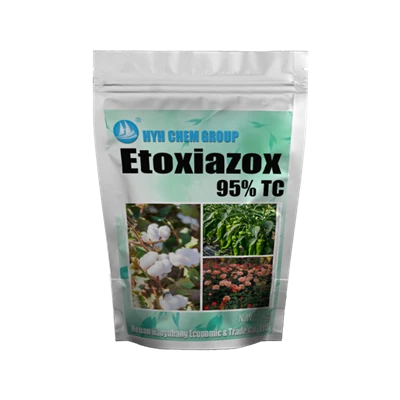
![Etoxazole 95% TC & 20% WP Acaricide | High Purity Agri Fungicide | CAS 153233-91-1 | One Of Leading Manufacturers in China]() Etoxazole 95% TC & 20% WP Acaricide | High Purity Agri Fungicide | CAS 153233...Etoxazole belongs to the class of chitin synthesis inhibitors. It acts by inhibiting chitin biosynthesis in mites,read more
Etoxazole 95% TC & 20% WP Acaricide | High Purity Agri Fungicide | CAS 153233...Etoxazole belongs to the class of chitin synthesis inhibitors. It acts by inhibiting chitin biosynthesis in mites,read more -
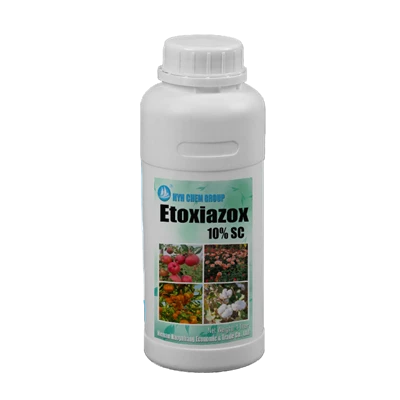
![Etoxazole 10% SC 30% SC – Highly Effective Ovicide & Larvicide Miticide For Mite Control in Agriculture]() Etoxazole 10% SC 30% SC – Highly Effective Ovicide & Larvicide Miticide For M...Etoxazole belongs to the class of diphenyl oxazoline derivatives and acts as an inhibitor of chitin synthesis. Itread more
Etoxazole 10% SC 30% SC – Highly Effective Ovicide & Larvicide Miticide For M...Etoxazole belongs to the class of diphenyl oxazoline derivatives and acts as an inhibitor of chitin synthesis. Itread more -
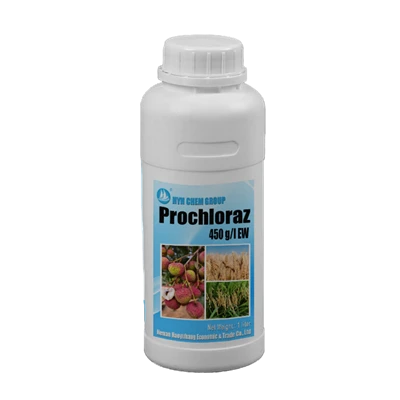
![Prochloraz 250g/L EC 450g/L EW Fungicide | Broad-Spectrum Systemic Activity | Highly Effective For Anthracnose, Bakanae & Scab | Agrochemical Formulation]() Prochloraz 250g/L EC 450g/L EW Fungicide | Broad-Spectrum Systemic Activity |...Prochloraz is a broad-spectrum, highly effective imidazole fungicide with both protective and curative activity. Itread more
Prochloraz 250g/L EC 450g/L EW Fungicide | Broad-Spectrum Systemic Activity |...Prochloraz is a broad-spectrum, highly effective imidazole fungicide with both protective and curative activity. Itread more