

What it is used for
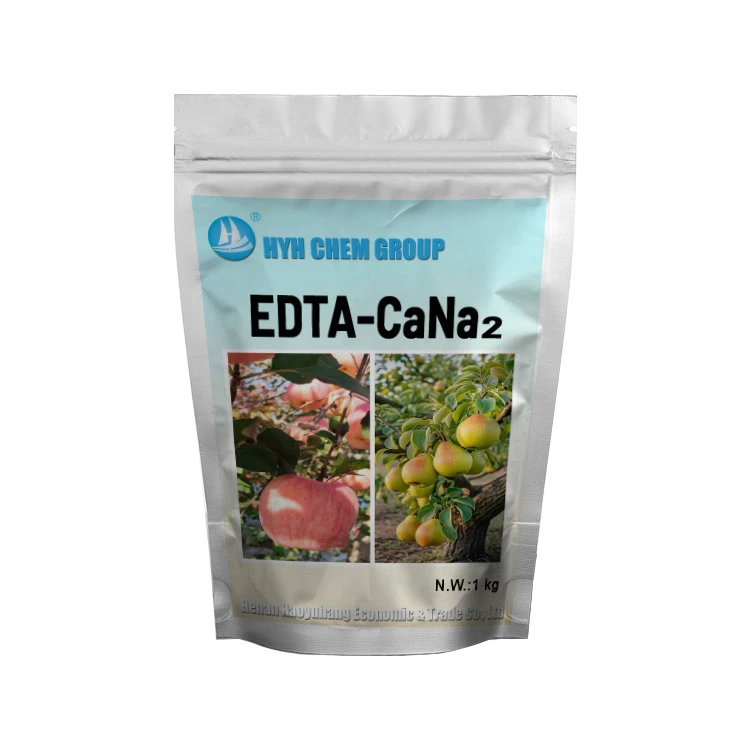
EDTA-chelated calcium's core identity is a calcium fertilizer, mainly used for foliar spraying, fertigation/drip irrigation, and some soil basal application scenarios. The goal is clear: to prevent or correct calcium-deficiency-induced physiological disorders, such as blossom-end rot in tomato and pepper, tipburn in Chinese cabbage, bitter pit in apple, and fruit cracking in grape and cherry.
Its selling point is stability. Ordinary calcium fertilizers (such as calcium nitrate and calcium chloride) readily react with phosphates and sulfates during mixing to form precipitates, clogging nozzles, rendering them ineffective, or even causing phytotoxicity. EDTA-chelated calcium can remain soluble across a wider range of pH and mixing conditions, which is why it is often chosen as a raw material for foliar fertilizers and water-soluble fertilizers.
But between "stable" and "effective" lie the tests of dosage and scenario.
How to use it more reliably
Based on existing research, several practical principles can be summarized:
First, foliar spraying depends more on "timing" and "frequency" than on a high single-dose concentration. In studies on grape fruit-cracking prevention, the best results came from six sprays, not from any single application at an especially high concentration. Because calcium has poor mobility, small amounts applied frequently, directed at fruit and new leaves, are more reasonable than one heavy spray.
Second, it is better suited as a "precision tool" than as a "cheap bulk element." Its added value truly shows in situations where it needs to be mixed with phosphate or sulfate fertilizers, or in scenarios such as cadmium reduction that have specific mechanistic support. If it is just routine calcium supplementation, ordinary calcium fertilizers are lower in cost when results are comparable.
Third, in soilless culture and nutrient solution systems, dosage must be controlled. Excessive concentrations inhibit growth and nutrient solution use efficiency; chelated calcium concentration should not exceed 20 mg/L.

Ultimately, EDTA-chelated calcium's position in agriculture is clear: it is a calcium source with good stability, relatively high uptake efficiency, and irreplaceability in specific scenarios (such as cadmium reduction or when mixing is difficult). But it is not magic-its effect on preventing fruit cracking is not necessarily better than cheap calcium chloride, excessive amounts likewise inhibit crop growth, and specifications and recommended rates vary enormously between products.
Whether to use it depends on what specific problem you face. If it is just routine calcium supplementation, calculate the cost first; if you need to mix it with phosphate fertilizer, address cadmium exceedance, or need a stable calcium source in a nutrient solution system, then it truly deserves a place in your plan.