Why choose EDTA-Cu instead of copper sulfate?
Traditional copper sulfate is cheap, but its drawbacks are obvious: it is easily fixed and rendered ineffective in soil, and foliar spraying at slightly too high a concentration can cause leaf burn. EDTA-Cu is in chelated form, with copper ions "wrapped" so that they remain soluble and absorbable across a relatively wide pH range, making it safer for crops.
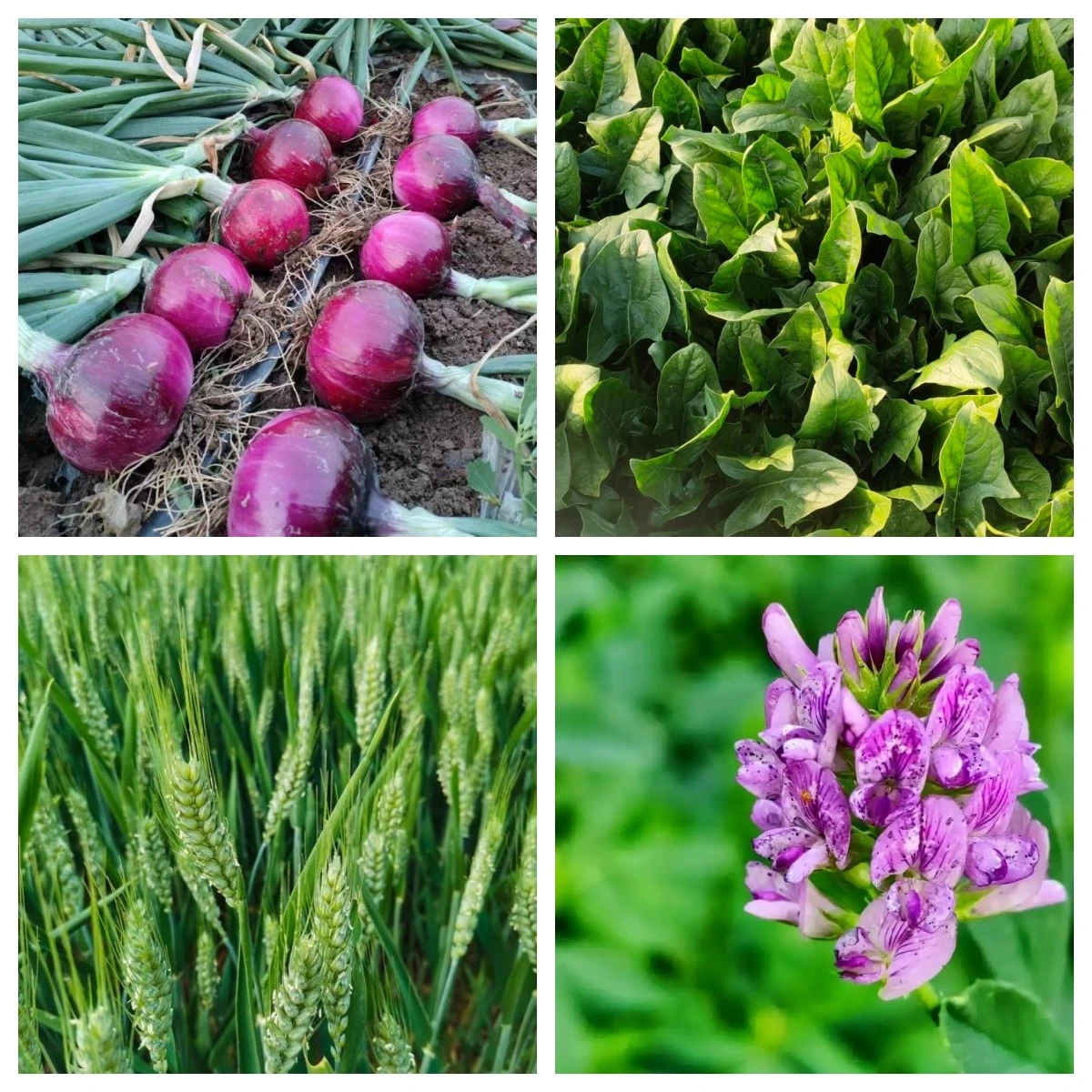
Foliar spraying with 0.2% EDTA-Cu solution, compared with a clear-water control, increased the number of grains per spike by 2.1, increased thousand-grain weight by 1.90 g, ultimately increased yield by 5.43%, and increased grain copper content by 11.31%. It is worth noting that in this trial, EDTA-Cu applied alone was even better than EDTA-Cu mixed with EDTA-Zn. This shows that on copper-deficient plots, fully correcting the copper deficiency first is more cost-effective than "trying to fix both copper and zinc at once."
Two practical scenarios: foliar spraying and drip irrigation
Foliar spraying is the most common method. Based on the trial above, an EDTA-Cu spray concentration of around 0.2% is relatively safe. Commercial products generally recommend dilution of 2000–3500 times, with 30–50 g per mu, sprayed 2–3 times at intervals of 7–15 days. Gramineous crops (such as wheat) are relatively sensitive to copper; when copper is deficient, new leaves tend to turn white and twist, and one application before heading can significantly reduce shriveled grains.
In drip irrigation scenarios, EDTA-Cu has an easily overlooked advantage. A study specifically compared the performance of EDTA-Cu and copper sulfate in brackish-water drip irrigation systems and found that EDTA-Cu actually reduced calcium carbonate–silica scale deposition in the flow channels, alleviating clogging to some extent. Of course, the premise is that the water itself should not be too hard, and it should not be mixed indiscriminately in the same tank with fertilizers high in calcium and magnesium.
Several common pitfalls
First, do not increase the dose blindly. Copper is a heavy metal, and crops need only trace amounts. Foliar spraying above 0.3% carries risk, and for seed treatment, 0.5% EDTA-Cu actually reduces germination rate and seedling vigor. Although EDTA-Cu is milder than copper sulfate, "mild" does not mean it can be doubled at will.
Second, test on a small scale before mixing. Mixing EDTA-Cu with foliar fertilizers containing calcium, magnesium, iron, or zinc may theoretically involve ligand competition. If mixing is necessary, it is recommended to first dilute the EDTA-Cu well, then add the other fertilizers sequentially, and use the mixture immediately rather than leaving it overnight.
Third, do not expect it to act as a fungicide. The fungicidal effect of copper formulations mainly relies on the slow release of free copper ions. After EDTA chelation, copper ion activity is largely locked up, and disease-control efficacy is far inferior to Bordeaux mixture or copper hydroxide. EDTA-Cu is positioned as a nutritional supplement; when fungal diseases have already appeared in the crop, fungicides should be used as fungicides.
Who should use it
If you grow wheat, citrus, or vegetables, and the soil pH is high (copper availability is low in calcareous soils), or if in previous years you have seen new leaves turning white or shoot tips dying without finding the cause, you can prioritize EDTA-Cu for a diagnostic copper supplementation. For field crops, the cost is a few dozen yuan per mu, and in exchange for a yield increase of about 5%, the economics work out.
For orchards or protected vegetables, it is recommended to first take a soil sample and test available copper. Only when DTPA-extractable available copper is below 0.2 mg/kg is there a clear return from copper supplementation; blind copper supplementation not only wastes money, but long-term excess can also inhibit soil microorganisms and root growth.