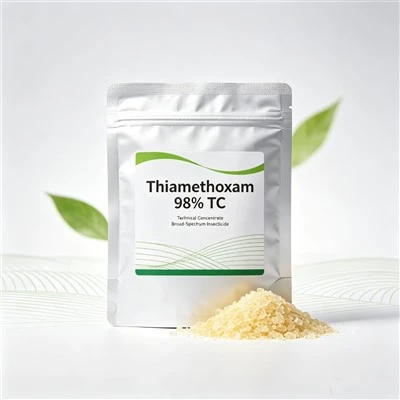
Thiamethoxam: A Trusted Systemic Insecticide for Sucking Pest Control
If you grow vegetables, rice, citrus or cotton, you know how damaging sucking pests like aphids, whiteflies, thrips and planthoppers can be. These tiny pests drain sap and spread viruses fast, eating away at your yield and crop quality. This is why thiamethoxam (CAS:153719-23-4, IRAC 4A), a second-generation neonicotinoid systemic insecticide, remains a staple tool for growers worldwide.
Thiamethoxam works with both contact and stomach poison action. Once taken in by leaves or roots, it travels upward through the plant's vascular system and protects new growth that comes out later. When pests feed on treated tissue, they stop feeding quickly. That matters a lot, because it cuts down virus transmission before heavy damage sets in.
One of its biggest strengths is flexibility. You can apply it as a foliar spray, soil drench or seed coating. Seed treatment is especially handy; it guards tender seedlings right after germination. It has strong systemic activity, long residual control, and good rainfastness once absorbed into the plant. Less frequent spraying means less labour and lower cost for farmers. It also has no cross-resistance with pyrethroids, organophosphates or carbamates, so it works great as a rotation option within an IPM plan.
That said, thiamethoxam is not a magic fix, and it comes with clear limits. Since it belongs to neonicotinoids, repeated back-to-back use will push pests to build resistance over time. Once resistance kicks in, this product will lose its power. It also poses risks to bees and other pollinators. You should never spray it on blooming crops when pollinators are active. Smart growers rotate it with insecticides from different IRAC groups and stick strictly to recommended doses.
It fits most common crops, from rice and cotton to leafy greens and fruit trees. Scout your fields first, and match the application method to your pest stage. Use seed treatment for early protection, foliar sprays when pest outbreaks show up.
At the end of the day, thiamethoxam delivers reliable, broad-spectrum control when you use it responsibly. It is cost-effective and easy to fit into regular farm programs, but its performance depends on careful, sustainable use. Rotate chemistries, protect pollinators, and you can keep this tool working for your harvest year after year.