Core Advantage: A Clear Edge on Calcareous Soils
In a greenhouse study on calcareous soil, plants supplied with EDTA-chelated cobalt (CoEDTA) showed significantly higher cobalt content than those treated with inorganic cobalt sulfate. Even more noteworthy is the efficiency gap-at comparable leaf cobalt concentrations, the EDTA-Co application rate was only about one-twentieth that of inorganic cobalt (2.5 ppm Co as CoEDTA vs. 50 ppm Co as CoSO₄). For soils with high pH and high calcium carbonate content, this difference means lower rates and more stable uptake.
Application Method and Timing
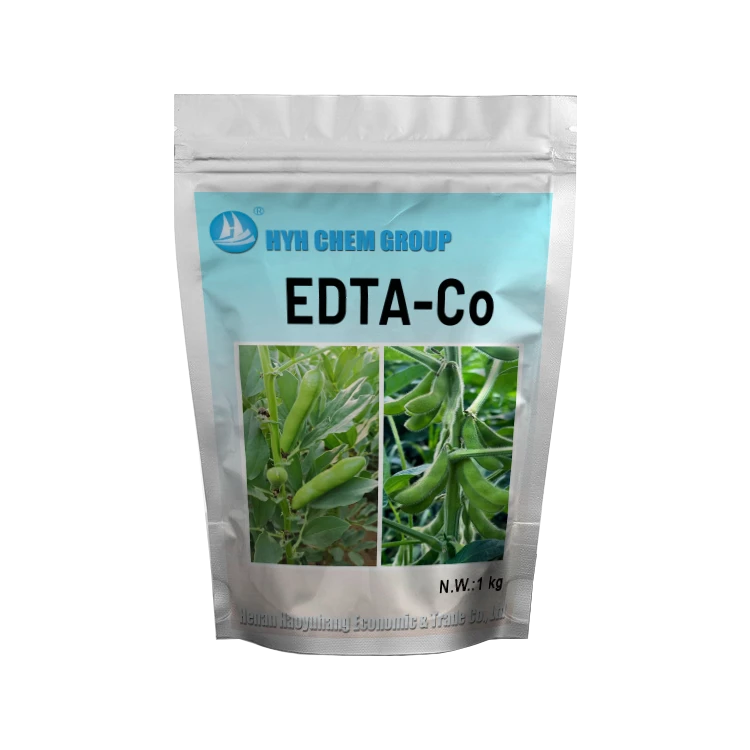
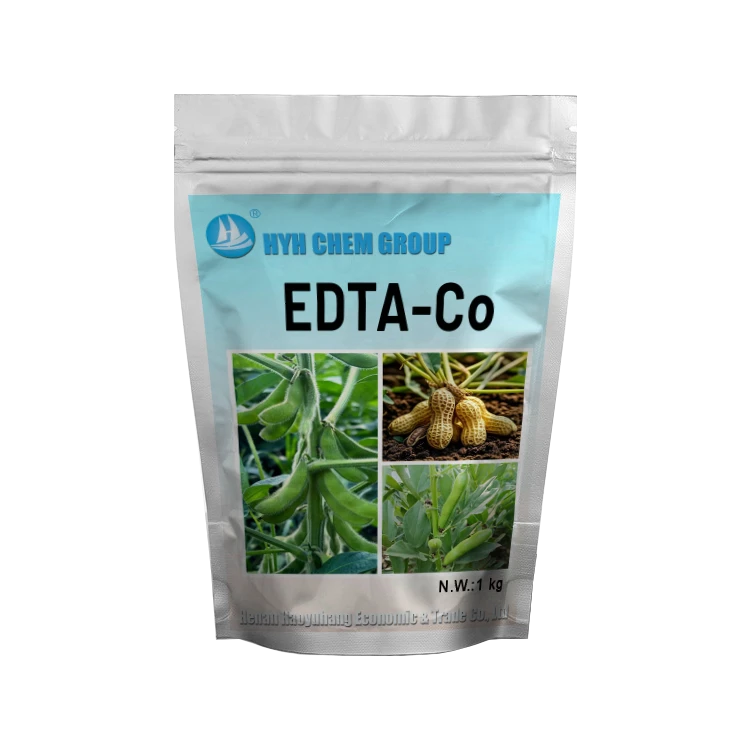
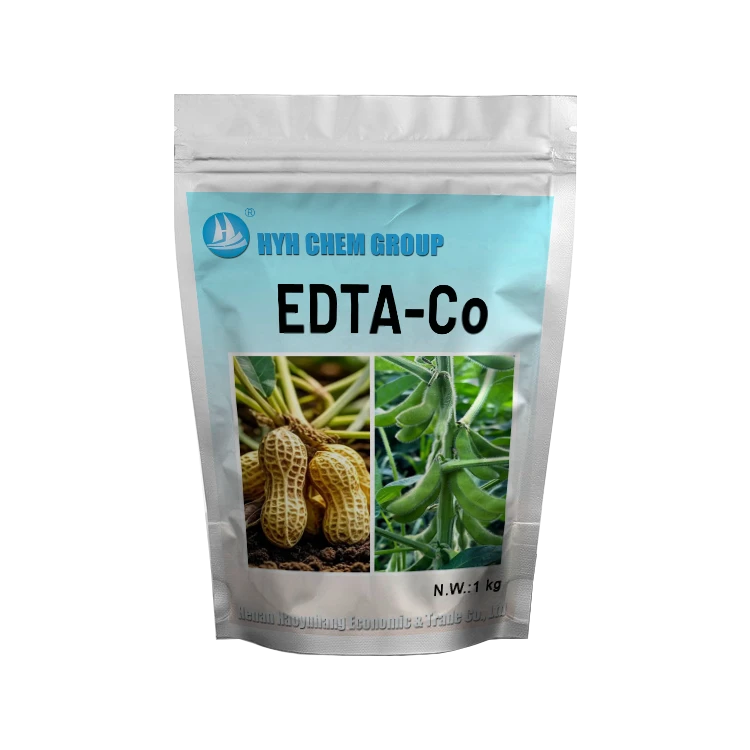
EDTA-Co is primarily applied via foliar spray. Recommended application scenarios include: legume crops at the early growth stage after leaves have fully expanded, and pasture grasses in early spring; root crops and pulse crops also have corresponding spraying windows. Product guidance specifically notes that when root uptake is limited (drought, unsuitable pH, low temperature), chelated cobalt can still respond relatively quickly to the plant's actual needs. That said, foliar feeding is always a supplementary measure and cannot replace a basic fertilization program.

A Counterexample Worth Noting
EDTA-Co is not superior to inorganic cobalt in every scenario. A multi-year field trial on pasture grass in Scotland found that cobalt sulfate was actually more effective than cobalt-EDTA at raising cobalt concentrations in grass, and that EDTA-Co recovery in soil was below 20%. This shows that the chelate form's advantage has clear boundaries-its stability value stands out on calcareous soils under high pH, but in certain pasture systems or specific soil environments, the inorganic form may be more directly effective. When choosing a product, it's best to judge based on your own field's pH and crop type.
Restraint in Dosage Is the Bottom Line
Cobalt is a classic micronutrient with extremely low plant demand. In the legume greenhouse study mentioned above, a chelated cobalt application rate of 50 ppm already caused a slight decline in dry-matter yield. Commercial EDTA-Co recommendations also explicitly cap dilution at no more than 2.8 mL per liter of water. Treating it as a "micronutrient fine-tuner" rather than a "yield-boosting workhorse" will keep your expectations well grounded.
One-line summary: The value of EDTA-Co lies in using the chelate structure to "escort" cobalt through soil environments where it readily precipitates. Its efficiency advantage is clear on calcareous soils and in legume nitrogen-fixation scenarios, but dosages are extremely small and the boundaries of applicability are well defined-it fits into a precision micronutrient management program, not blind rate increases.