What Can It Actually Treat?
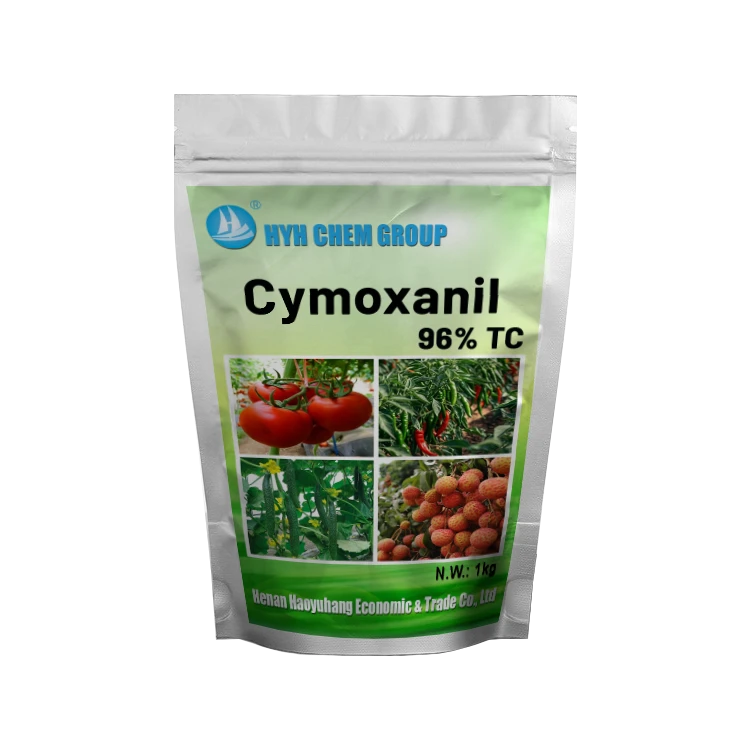
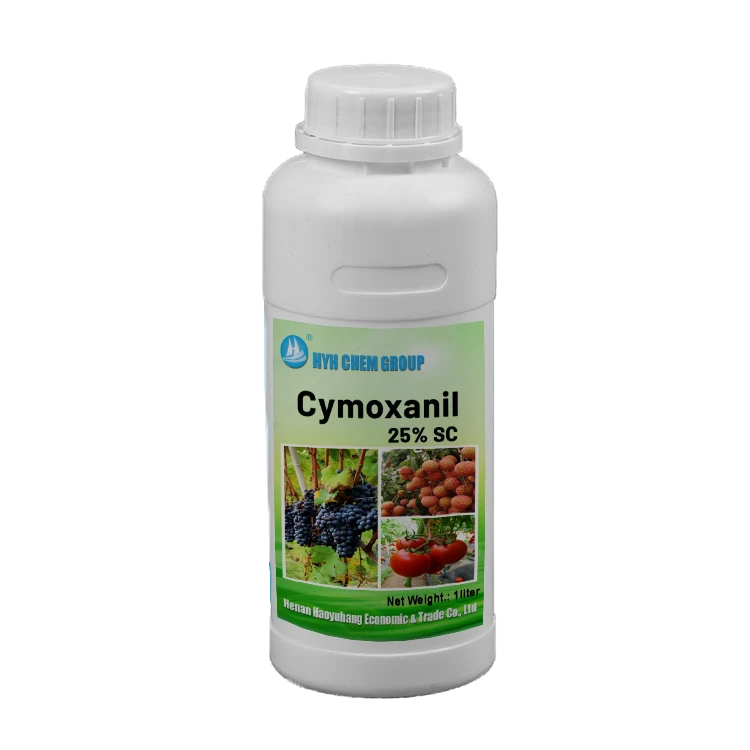
Cymoxanil's spectrum isn't broad, but it hits its targets with precision. It mainly goes after Peronosporales fungi, and it's effective against Phytophthora, Peronospora, and Plasmopara. The troubles you run into in the field mostly fall within its range:
Cucumber downy mildew: One of the most common scenarios. Spray a cymoxanil-containing combination product at early symptom onset, roughly every 7 days, for 2–3 consecutive applications.
Grape downy mildew: Typically sprayed as a 2500–3500× dilution.
Potato late blight: Per-mu dosage varies by formulation; generally applied before or at early onset.
Litchi downy blight: In wet years, fruit rot can reach 30–50%. Cymoxanil combined with copper-based products is a commonly used approach.
One detail to note: cymoxanil primarily inhibits pathogen spore germination, while also having some killing effect on pathogens that have already invaded host tissue. That's why "early onset" matters so much - wait until lesions are all over the field, and efficacy drops off.

Why Are You Always Told to "Mix It"?
Look at products on the market - pure cymoxanil single-formulation products are actually few and far between. Most are cymoxanil + protective fungicide combinations, such as copper succinate-glutarate·cymoxanil, chlorothalonil·cymoxanil, or mancozeb·cymoxanil.
The logic is simple. Cymoxanil has local systemic activity - it can penetrate and kill pathogens that have already invaded - but its protective capacity is limited, and its residual activity isn't particularly long. Pair it with a protectant like a copper formulation or chlorothalonil, and one handles "cure" while the other handles "protect," pulling up residual performance for a more reliable result. Patent literature also shows researchers continually trying to pair cymoxanil with newer actives like pyraclostrobin or fluopicolide - the goal being, of course, delaying resistance and broadening the spectrum.
So when you're mixing your own tank, if you only have a cymoxanil single product on hand, it's best to add a protective fungicide alongside - don't let it fight alone.