What exactly is it?
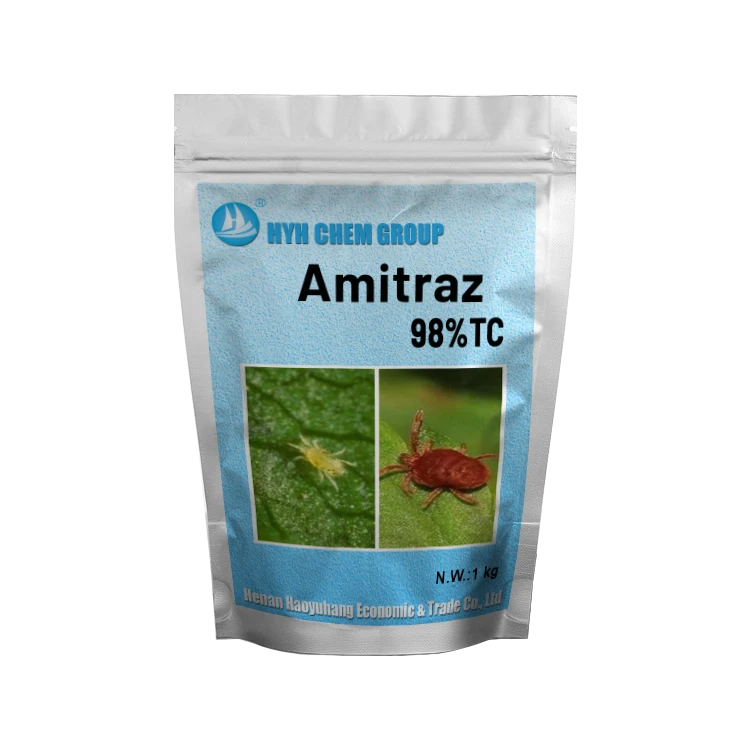
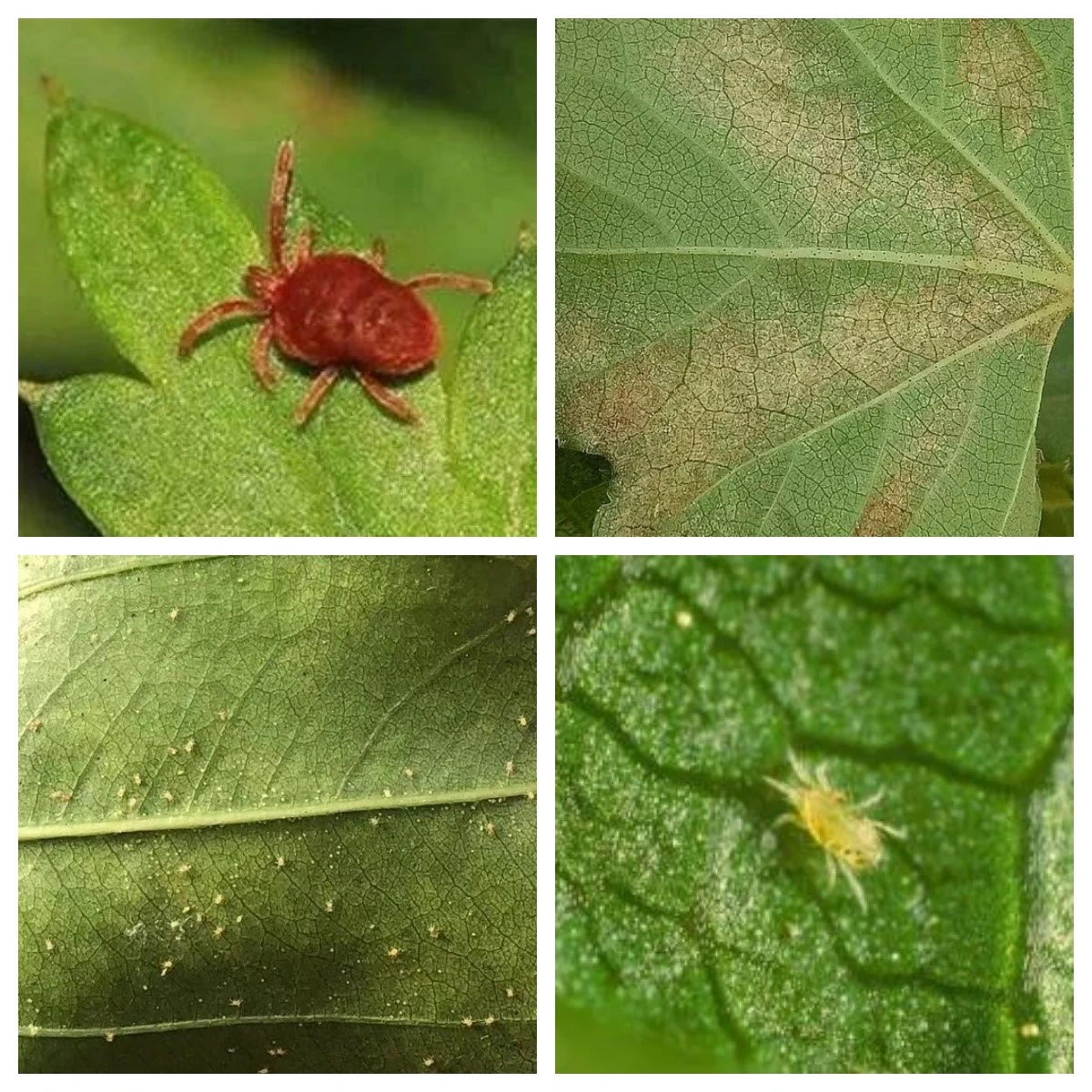
Amitraz is a formamidine acaricide/insecticide. Its mechanism of action is rather special: it primarily inhibits monoamine oxidase, while also having stomach-poison, contact-kill, antifeedant, and repellent effects on pest mites, and even some fumigant activity. It is active against all developmental stages of mites-eggs, larvae, nymphs, and adults-except that it performs very poorly against overwintering eggs. This means that if you apply it in early spring before overwintering eggs hatch, it's basically wasted effort.
Amitraz is used mainly on citrus trees and cotton, targeting red spider mites; also citrus scale insects, pear psylla on pear trees, and red spider mites on apple trees.
Temperature determines success or failure
Amitraz has a very distinct "temperament": efficacy is poor at low temperatures and good at high temperatures. When the temperature is below 20°C or 25°C, its efficacy develops slowly and control is poor; it is recommended for use in hot, sunny weather. This is a classic positive temperature coefficient pesticide. So if you plan to use it in early spring or late autumn to suppress red spider mite populations, you'll most likely be disappointed. Conversely, applying it during hot summer periods both matches its activity pattern and takes advantage of its relatively friendly profile toward natural enemies-it has low toxicity to bees, silkworms, and natural enemies, but you should still avoid using it near nectar-source crops during flowering and near mulberry orchards.
The pre-harvest interval is not just for show
The pre-harvest interval for amitraz on citrus is 21 days, with a limit on the number of applications per season: 3 for spring shoots and 2 for summer shoots. On cotton, the pre-harvest interval is 7 days, with a maximum of 2 applications per season. Behind these numbers is the control of residue risk. The maximum residue limit for amitraz on citrus fruits, apples, pears, tomatoes, cucumbers, and many other crops is uniformly 0.5 mg/kg, while in cottonseed oil it is as low as 0.05 mg/kg. Excessive or frequent use can easily get a batch of fruit rejected at the purchasing stage.
Another easily overlooked point is that it cannot be mixed with alkaline substances. Once alkaline pesticides such as Bordeaux mixture or lime sulfur are mixed with amitraz, decomposition and loss of efficacy are almost inevitable. In addition, when spraying amitraz at high temperatures, be careful of drift-chili pepper seedlings and pear trees are sensitive to its phytotoxicity under high temperatures.
An old friend in the pet world, but cats and horses should avoid it
Amitraz may be even more well-known in veterinary circles than in agricultural ones. It is widely used to kill ticks, mites, and lice on dogs, cattle, and sheep, and dog anti-parasite collars commonly contain about 9% amitraz. But two contraindications are worth remembering: do not use it on cats or horses. There are reports of fatal intestinal obstruction in horses exposed to amitraz, and cats are prone to toxic reactions due to metabolic differences. In addition, amitraz affects blood glucose and insulin levels, so diabetic animals should avoid it.
For humans, amitraz is irritating to the skin and mucous membranes and has a depressive effect on the central nervous system. Wearing protective clothing and avoiding inhalation and skin contact during application are basic requirements.
In the end
Amitraz is an old pesticide that "depends on the weather." Hot weather, early stages of mite infestation, and rotation of pesticides-get these three right, and its performance on citrus and cotton is reliable. But it is not a master key: it can't kill overwintering eggs, it won't work at low temperatures, it can't be mixed with alkaline pesticides, and cats and horses must not come into contact with it. Keeping these boundaries clear is more important than remembering what it can treat.