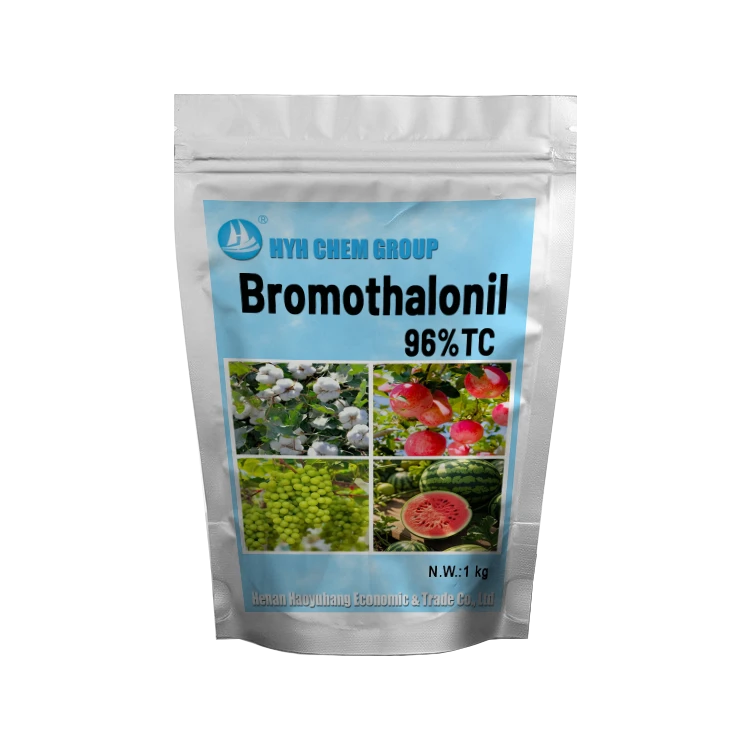
Bromothalonil isn't a new compound
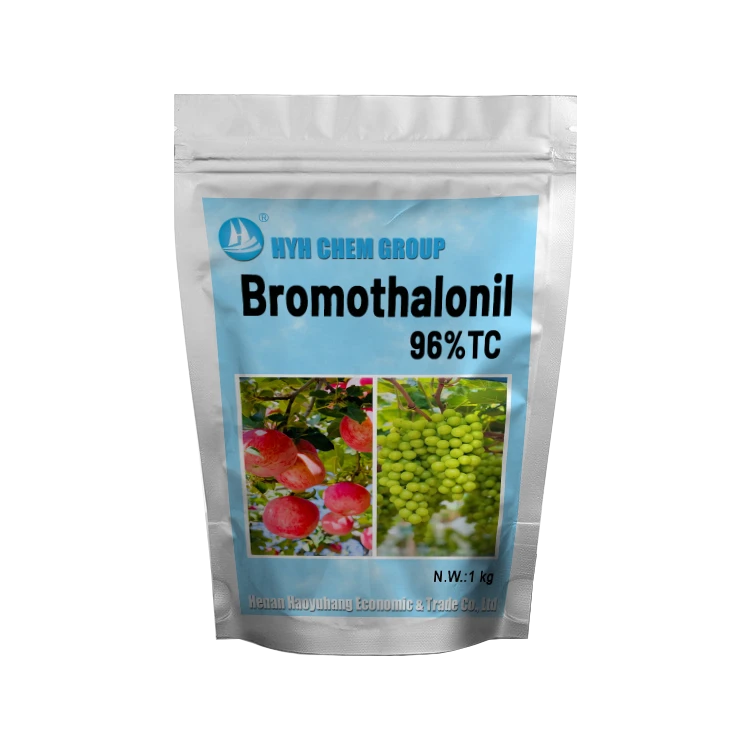
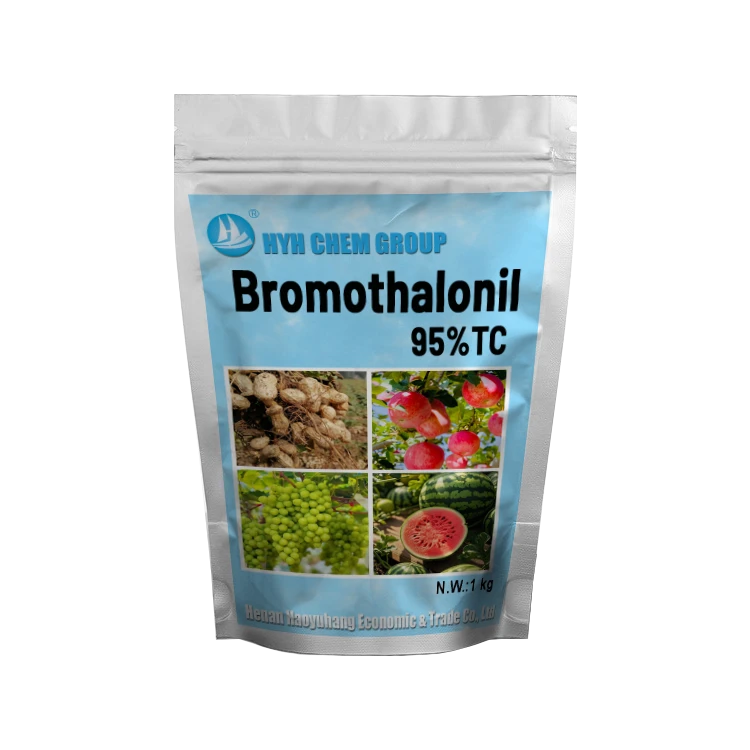
it has a distinctive feature: it works against both fungi and bacteria. That's genuinely rare among fungicides.
Its mode of action is interesting. After being absorbed by the fungal cell, it interferes with the esterase system involved in amino acid metabolism, blocking normal protein synthesis. Hyphal elongation is inhibited, cells become granular, and ultimately fungal growth and reproduction are suppressed. Simply put, it cuts off the pathogen's "food supply" so it can't develop properly.
In practical applications
Bromothalonil performs especially well against anthracnose. You'll find it studied and registered for mango anthracnose, kumquat anthracnose, and cucumber anthracnose. More importantly, single-agent products easily breed resistance, but bromothalonil has excellent mixing flexibility. Combined with kasugamycin, it manages both bacterial angular leaf spot and anthracnose; mixed with pyridinethione salts against strawberry anthracnose, field efficacy at medium-to-high doses clearly outperforms single agents, reaching over 80% control at 14 days. This "team-up" ability keeps it from being easily defeated by resistance.
There are pitfalls to avoid
Soybeans and lotus are sensitive to bromothalonil-don't let spray drift onto these crops. It's also toxic to bees, silkworms, and aquatic organisms, so steer clear of blooming periods, silkworm rearing areas, and fish ponds. Don't mix it with alkaline pesticides, and follow the pre-harvest interval for each crop-generally 3 days for cucumbers, but up to 21 days for rice.
Ultimately, bromothalonil isn't a "one-spray wonder" knock-out punch. Its value lies in being broad-spectrum, highly mixable, and targeted against anthracnose. If you're battling anthracnose or bacterial angular leaf spot and don't want to keep using the same class of chemicals until resistance builds up, it deserves a spot in your rotation list. After all, keeping pathogens guessing about your next move is the key to long-term disease management.