Pollen Polysaccharides: Application Rates, Product Grades and Fertilizer Compatibility
Introduction
Modern agriculture increasingly requires solutions that help crops make better use of nutrients, develop stronger root systems, and maintain healthy growth throughout different production stages.
Pollen polysaccharides, derived from natural bee pollen extracts, are being developed as plant biostimulant ingredients for agricultural applications. They can be incorporated into crop management programs and selected fertilizer formulations to support root development, vegetative growth, flowering, fruit enlargement, and fruit quality.
However, selecting the appropriate product grade, application rate, and fertilizer combination is essential for achieving consistent results.
In this guide, we explain how pollen polysaccharides are produced, how different product grades compare, how to adjust application rates, and what to consider when blending them with water-soluble fertilizers.
1. Bee Pollen: A Naturally Diverse Source of Nutrients
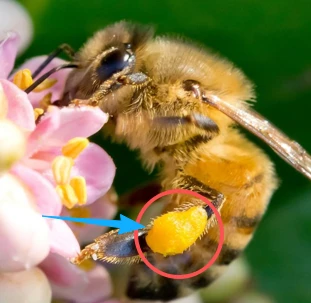
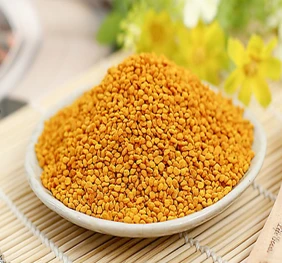
Bee pollen is a natural material collected by honeybees from flowering plants. It is valued for its complex nutritional composition and diverse naturally occurring compounds.
Often described as a natural nutrient reservoir, bee pollen may contain a broad range of nutritional and bioactive components, including:
- Amino acids: A variety of amino acids that contribute to its nutritional profile.
- Vitamins: Different vitamins, including members of the B-vitamin group and vitamin C.
- Minerals and trace elements: Naturally occurring elements such as potassium, magnesium, calcium, iron, silicon, and phosphorus.
- Enzymes and proteins: Various proteins, enzymes, and other nitrogen-containing compounds.
- Nucleic acids and phenolic compounds: Naturally occurring compounds that contribute to the complexity of bee pollen.
A Natural Micro-Nutrient Reservoir
Bee pollen is sometimes described as a natural micro-nutrient reservoir because it contains multiple mineral elements and other nutritional components in a compact natural matrix.
Its composition, however, is not fixed. Botanical origin, geographical location, harvesting season, and processing conditions can all influence the nutritional profile of the raw material.
Why Does Bee Pollen Matter for Agricultural Applications?
For agricultural applications, bee pollen is more than a source of a single isolated compound. It provides a complex natural raw material containing multiple components that can be explored through specialized extraction and processing technologies.
This is one reason why pollen-derived ingredients have attracted interest in the development of natural plant biostimulant products.
However, the composition of raw bee pollen should not be confused with that of a finished pollen extract. The actual components retained in a commercial extract depend on the extraction, processing, and quality-control procedures used.
2. What Are Pollen Polysaccharides?
Pollen polysaccharides are obtained from bee pollen, a natural material containing various organic components.
Depending on the botanical source, pollen may contain different proportions of polysaccharides, proteins, amino acids, lipids, and other naturally occurring compounds.
Different pollen sources, such as rapeseed, lotus, sunflower, and tea pollen, can have different natural composition characteristics.
For agricultural applications, the quality of a pollen extract is influenced by several factors:
- Raw material source and quality
- Pollen wall disruption technology
- Extraction and enzymatic processing
- Product concentration and formulation
- Solubility and compatibility with other agricultural ingredients
Therefore, evaluating a pollen extract requires more than simply looking at its product name or grade. The extraction process and actual application performance also matter.
3. SIGOT Pollen Polysaccharides: Extraction Technology
One of the technical challenges in processing pollen is its complex outer structure.
Pollen grains have a protective outer wall containing sporopollenin, a highly resistant structural material. This structure can limit the release of certain components from inside the pollen grain.
SIGOT uses a combined processing approach involving: High-Pressure Microfluidization + Enzymatic Treatment
The production process is designed to improve pollen wall disruption and facilitate the release of internal components.
The main process stages include:
- Selection and preparation of pollen raw materials
- High-pressure microfluidization treatment
- Enzymatic treatment
- Release and extraction of internal components
- Further processing and formulation
This combined approach is intended to improve the utilization of pollen raw materials and produce extracts suitable for agricultural applications.
4. Three Product Grades: 10°, 30° and 50°
SIGOT offers three product grades to meet different formulation, transportation, and application requirements.
The grade numbers are factory product identifiers based on the company's pollen extract sugar-degree measurement system. They should not be interpreted as the percentage purity or active polysaccharide content of the finished product.
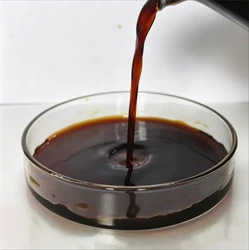
| Technical Parameters | 10° Liquid | 30° Liquid | 50° Powder |
|---|---|---|---|
| Product Picture |  |
 |
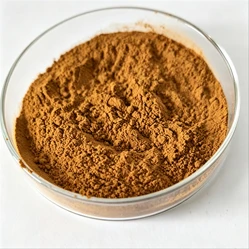 |
| Product Form | Liquid | Liquid Concentrate | Powder |
| Appearance | Light brown liquid | Dark brown liquid | Light brown powder |
| Odor | Characteristic pollen aroma | Characteristic pollen aroma | Not specified |
| pH Value | Approximately 5 | Approximately 5 | Neutral |
| Water Solubility | Soluble in water | Soluble in water | Fully soluble in water |
Remark: Why Is the 50° Grade Supplied as a Powder?
At the 50° grade, the highly concentrated pollen extract becomes very viscous when maintained in liquid form. To make the product more practical for commercial distribution and agricultural application, factory uses further processing technology to convert the concentrated extract into powder.
This powder format offers practical advantages in packaging, transportation, storage, handling, and on-site application.
5. Application Rates at Different Crop Growth Stages
Pollen polysaccharides can be applied at different stages of crop development, depending on the intended application purpose.
SIGOT uses the 10° product as the standard dosage reference. The 30° and 50° grades have higher product-grade levels and therefore require proportionally lower application rates.
Grade-Based Dosage Conversion
- 10° Liquid: Standard application rate (1×)
- 30° Liquid Concentrate: 1/3 of the 10° dosage
- 50° Powder: 1/5 of the 10° dosage
The following application rates are calculated according to this grade-based conversion system.
Recommended Foliar Application Rates
All dosage rates below are calculated per 15 kg of water.
| Crop Growth Stage | Application Purpose | 10° Liquid | 30° Liquid | 50° Powder |
|---|---|---|---|---|
| Root development and vegetative growth | Support root development and healthy early growth | 1–3 g | 0.33–1.00 g | 0.20–0.60 g |
| Flowering and fruit setting | Support flowering, fruit setting and branch development | 5–7 g | 1.67–2.33 g | 1.00–1.40 g |
| Fruit enlargement | Support fruit enlargement and development | 7–10 g | 2.33–3.33 g | 1.40–2.00 g |
| Fruit coloring and quality management | Support fruit coloring and market quality development | 10–20 g | 3.33–6.67 g | 2.00–4.00 g |
6. How to Convert Application Rates Between 10°, 30° and 50° Grades
An important advantage of the three-grade product system is that customers can adjust their application rates according to the selected product grade.
The 10° product is used as the standard reference:
- 10°: 1× reference dosage
- 30°: approximately 1/3 of the 10° dosage
- 50°: 1/5 of the 10° dosage
Example: Application with 15 kg of Water
When the recommended 10° application rate is 5 g per 15 kg of water:
| Product grade | Equivalent application rate |
|---|---|
| 10° liquid | 5 g |
| 30° liquid | Approximately 1.67 g |
| 50° powder | 1 g |
The same conversion principle can be applied to other recommended rates.
Dosage conversion formula:
- For the 30° grade: 30° dosage = 10° dosage ÷ 3
- For the 50° grade: 50° dosage = 10° dosage ÷ 5
These ratios are the manufacturer's grade-based application conversion guidelines. They are intended to provide equivalent application references, rather than to represent laboratory-certified active polysaccharide percentages.
7. Compatibility with Water-Soluble Fertilizers
Pollen polysaccharides can be incorporated into selected water-soluble fertilizer systems.
Based on the company's formulation compatibility information, the following fertilizer categories have been evaluated:
| Fertilizer category | Typical formulation environment | Compatibility observation |
|---|---|---|
| Amino acid-based micronutrient fertilizer | Weakly acidic | Stable |
| Amino acid-based macroelement fertilizer | Weakly acidic | Stable |
| Humic acid-based macroelement fertilizer | Weakly acidic | Stable |
| High-phosphorus and potassium water-soluble fertilizer | Weakly alkaline | Unstable in the tested formulation |
| Water-soluble macroelement fertilizer | Weakly acidic | Stable |
| Water-soluble secondary element fertilizer | Neutral or weakly acidic | Stable |
| Water-soluble micronutrient fertilizer | Acidic | Stable |
| Organic water-soluble fertilizer | Acidic | Stable |
Compatibility depends not only on pH, but also on the complete formulation, metal ion concentration, salt composition, and ingredient interactions.
SIGOT has conducted compatibility evaluations under different pH conditions, including tests within the pH 2–8 range.
8. Crop Application Observations and Trial Experience
SIGOT has conducted application evaluations involving several crops, including mung bean, pepper, tomato, peanut, cucumber, and eggplant.
The following examples illustrate the types of responses observed in the company's trials.
Root Development: Mung Bean
In a mung bean hypocotyl rooting experiment conducted from October 27 to November 6, 2025, pollen polysaccharide-treated plants were observed to have more fine roots and longer root systems than the untreated control after nine days.
Plant Growth and Fruit Setting: Pepper
In a 53-day pepper trial, different application concentrations were evaluated.
The 2,000-fold treatment group recorded an average of 14.2 fruits per plant, compared with 9.4 fruits per plant in the control group. This represented approximately 51% more fruits in the five-plant comparison.
The 5,000-fold treatment group also showed stronger stem development and plant growth observations in the trial.
Fruit Enlargement: Tomato
Field observations in tomato trials recorded changes in fruit transverse diameter at different observation intervals.
Measurements were taken over 7-, 14-, and 21-day periods to evaluate fruit enlargement and development following application.
Leaf Development: Peanut and Cucumber
Peanut and cucumber evaluations included observations of chlorophyll content, leaf nitrogen content, leaf thickness, and stem development.
In the peanut trial, measured chlorophyll and leaf nitrogen values were higher in the treated groups than in the control group.
These results are observations from specific experimental conditions. Actual field performance may vary with crop variety, climate, soil conditions, application timing, and management practices.
9. Why Fertilizer Manufacturers Choose Pollen Polysaccharides
For agricultural input manufacturers, pollen polysaccharides offer an additional natural-origin ingredient option for fertilizer product development.
Potential formulation directions include:
- Amino acid-based water-soluble fertilizers
- Humic acid-based fertilizer systems
- Organic water-soluble fertilizers
- Selected macroelement and micronutrient formulations
- Specialized crop nutrition products
By incorporating pollen polysaccharides into suitable fertilizer systems, manufacturers can explore new formulations designed to support crop growth and development.
The choice of product grade depends on the intended formulation, concentration, packaging requirements, transportation conditions, and end-use application.
10. Work with SIGOT on Pollen Polysaccharide Solutions
SIGOT focuses on pollen extract processing, product development, and agricultural application solutions.
Our product range includes:
- 10° liquid pollen extract
- 30° concentrated liquid pollen extract
- 50° water-soluble pollen extract powder
We can discuss product selection, grade-based dosage conversion, fertilizer compatibility, and formulation development according to your application requirements.
Whether you are a fertilizer manufacturer, agricultural input distributor, or agricultural formulation developer, our team welcomes technical discussions and cooperation opportunities.
Contact SIGOT to discuss pollen polysaccharide products, formulation solutions and other biostimulant for your market.