6-BAP GA4+7 3.6% SL Plant Growth Regulator
For commercial fruit growers, orchard profitability hinges on three critical factors: consistent and synchronized bud break, stable fruit retention after bloom, and attractive, uniform fruit shape that meets supermarket and export standards. Unpredictable spring temperatures, late frost stress, weak flower vitality and uneven dormancy release often lead to staggered flowering, heavy fruit drop, and a high share of deformed, low-value fruits, which directly cut growers' revenue.
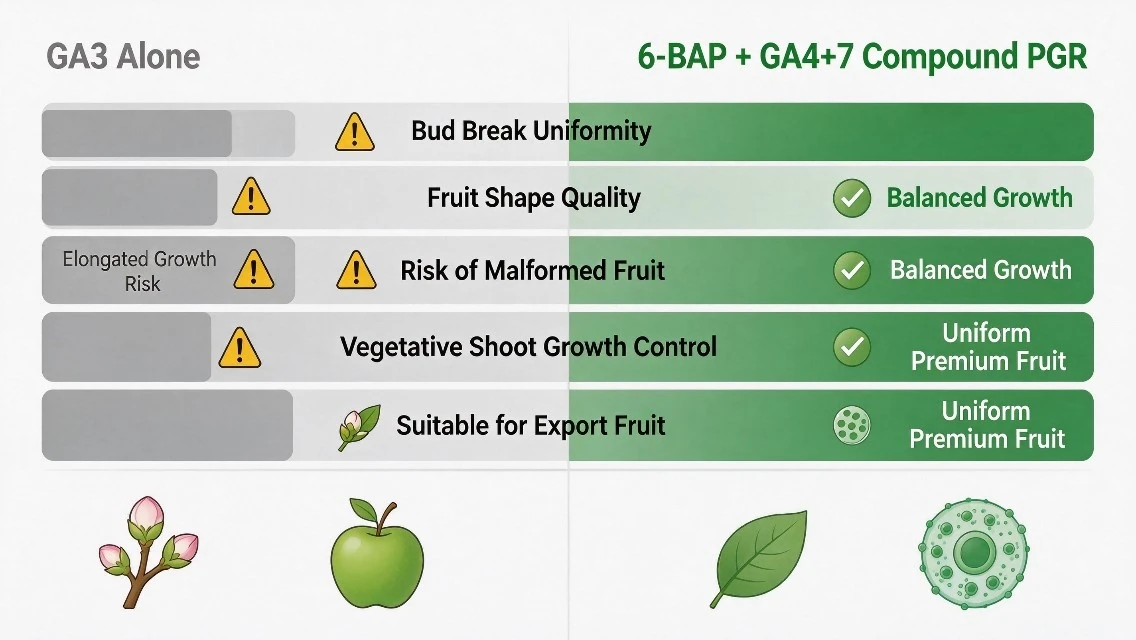
Single gibberellin products such as GA3 are widely available, yet they carry well-known drawbacks: excessive elongation of shoots and fruit, increased risk of lopsided fruit, and poor balance between vegetative and reproductive growth. That is why compound PGR formulations like 6-BAP GA4+7 3.6% SL have become a preferred solution for high-value fruit production worldwide.
This soluble liquid formulation pairs 6-BAP (cytokinin) and GA4+7 (gibberellins A4+A7) at a balanced ratio, delivering a synergistic regulatory effect on cell division and cell elongation. It is absorbed rapidly by buds, flower tissues and young fruitlets, moving to active meristem sites to regulate growth signals. Whether you manage commercial apple orchards, cherry blocks, kiwi plantations or berry farms, this PGR helps stabilize yield and upgrade fruit quality.
What Is 6-BAP GA4+7 3.6% SL & How It Works
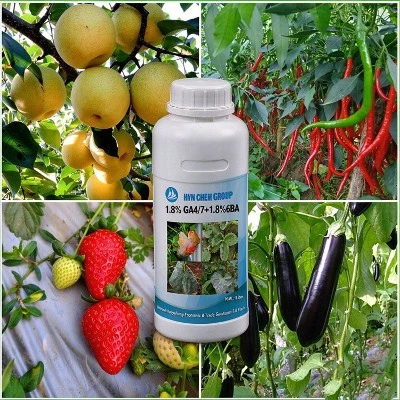
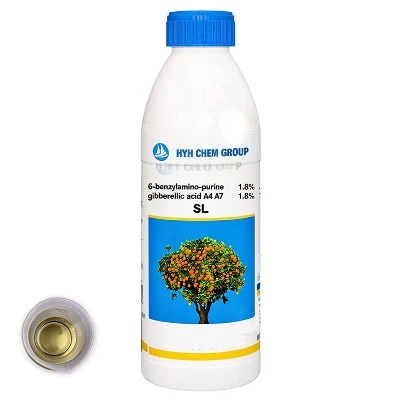
6-BAP GA4+7 3.6% SL is a compound soluble liquid plant growth regulator. The typical ratio is 1.8% 6-BAP + 1.8% GA4+7, formulated as SL (Soluble Liquid). The SL carrier system features excellent water miscibility, fast dilution, low sediment risk and no nozzle clogging, a major advantage over powder-based PGR products.
The two active ingredients work on different physiological pathways and complement each other:
- 6-BAP (6-Benzylaminopurine, Cytokinin): The core driver of cell division. It activates dormant meristem cells, stimulates bud awakening, strengthens flower vitality, reduces the formation of abscission layers on young fruitlets, and counteracts the over-elongation effect of gibberellins. It also helps allocate more photosynthate to reproductive organs instead of useless vegetative shoots.
- GA4+7 (Gibberellin A4 + Gibberellin A7): A milder, fruit-quality-focused gibberellin compared with GA3. It regulates controlled cell elongation, improves fruit length-to-diameter ratio (L/D ratio), shapes symmetrical fruit, and supports the expansion of fruit flesh without triggering rampant shoot growth. Unlike GA3, GA4+7 has a much lower tendency to produce overly elongated, misshapen fruit.
The synergy is the core value of this product: GA4+7 alone cannot stabilize fruit set well; 6-BAP alone is limited in shaping fruit morphology. Combined, they balance division and elongation. The result is even bud burst, better pollination and fruit retention, well-formed fruit, and a lower risk of excessive vegetative flush.
Core Advantages of 6-BAP GA4+7 3.6% SL for Commercial Orchards
1. Uniform Bud Break & Synchronized Flowering
Spring cold spells and uneven chilling accumulation often cause scattered bud opening: some branches bloom early while others remain dormant. This creates inconsistent pollination windows, complicates pest and disease control, and leads to uneven fruit maturity at harvest. 6-BAP GA4+7 activates dormant buds simultaneously, narrowing the flowering window and simplifying orchard management. It also offers partial protection against mild late frost damage during bloom by boosting flower tissue activity.
2. Higher Fruit Set Rate & Reduced Physiological Drop
Post-bloom fruit drop is a universal headache for fruit growers. Weak flower fertilization, nutrient competition between new shoots and fruitlets, and stress from fluctuating humidity trigger abscission. Applied at the correct early fruit stage, this PGR suppresses abscission layer development, preserves young fruitlets and stabilizes the fruit load. It is especially valuable for varieties that naturally set poorly, such as some sweet cherry and kiwi cultivars.
3. Optimized Fruit Typiness & Higher Premium Grade Rate
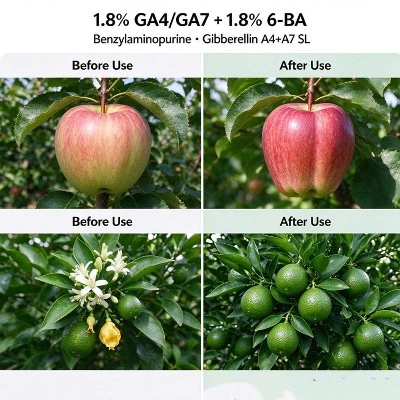
For export fruit, appearance determines pricing. Lopsided, irregular, flattened fruit get rejected or sold at heavy discounts. 6-BAP GA4+7 adjusts the fruit L/D ratio, promotes symmetrical fruit development, reduces russeting and malformation, and improves the uniformity of fruit size. Many apple producers use this formulation specifically to enhance fruit shape for fresh market sales.
4. Balanced Growth, Less Risk of Excessive Vigour
GA3-only sprays commonly trigger vigorous new shoot growth, which competes for nutrition with fruitlets and causes fruit drop. The 6-BAP component moderates gibberellin activity. When applied following recommended rates, the formulation prioritizes reproductive growth and keeps vegetative growth in check.
5. Stable SL Formulation & Convenient Field Operation
Soluble liquid mixes quickly and fully with water. It mixes easily with most neutral fungicides and foliar fertilizers (after jar compatibility test). There is no insoluble residue, no filter blockage, and it fits both backpack sprayers and large airblast orchard sprayers. The absorption speed is fast, with a rainfast period of roughly 4–6 hours after application.
Target Crops, Application Stages & General Guidance
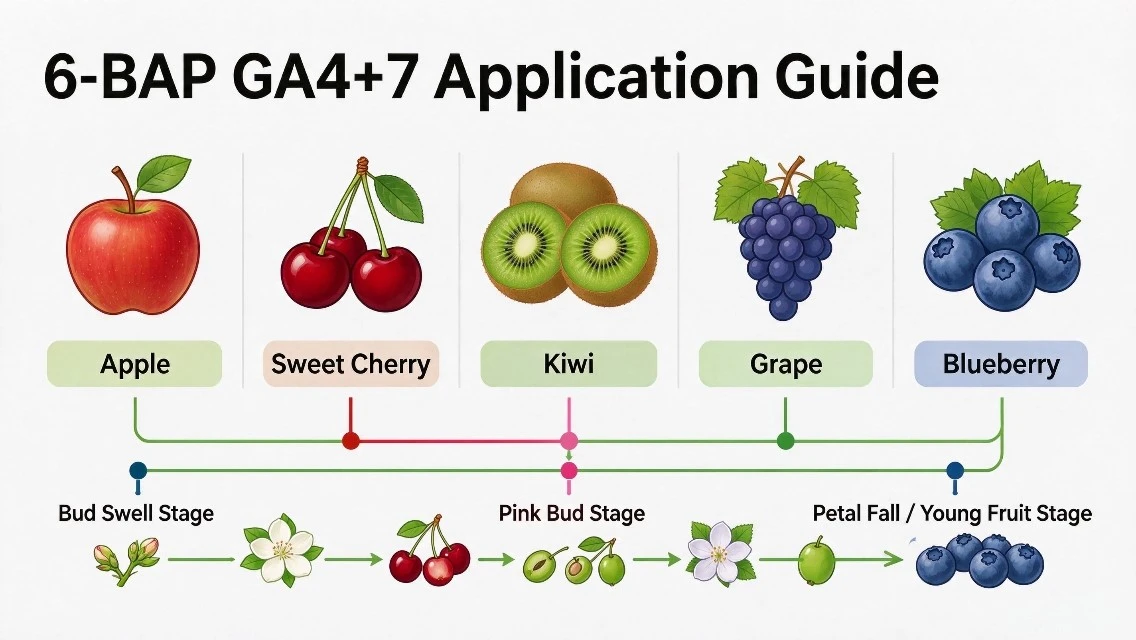
This PGR is widely adopted in temperate fruit crops. The application window is narrow and stage-sensitive; timing matters more than dosage.
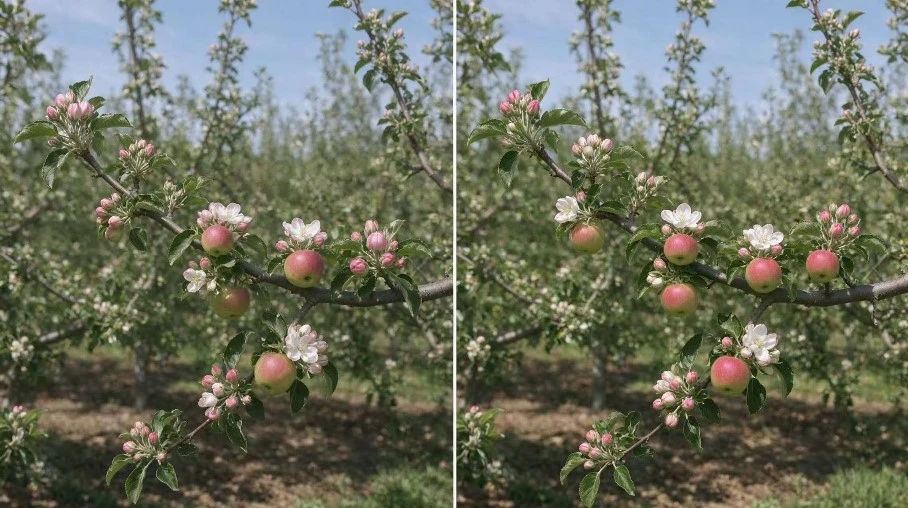
- Apple: Green tip to pink bud stage for bud uniformity; petal fall / early young fruit stage for fruit set and fruit shape improvement. Multiple light applications are preferred over one heavy dose.
- Sweet Cherry: Bud swell stage, to promote synchronized bud break and improve fruit set after bloom.
- Kiwi: Early bloom and post-bloom young fruit period, helps retain fruit and shape uniform berries.
- Table Grape: Flowering and young fruitlet stage, improve berry shape and reduce drop.
- Blueberry: Bud swell stage, support even bud break and consistent fruit sizing.
Critical Field Tip: PGR response varies heavily by cultivar, tree vigor, soil fertility, temperature and humidity. Always run a small trial plot 7–10 days before full-block spraying, testing the target rate and observing bud, leaf and fruit reaction. High temperature above 28–30°C during spraying increases phytotoxicity risk.
Tank Mix Rules, Restrictions & Safety Precautions
Plant growth regulators are biologically active; improper mixing or spraying will lead to loss of efficacy or phytotoxicity.
- Mixing Compatibility: Do NOT tank mix with strong alkaline agrochemicals, lime sulfur, copper-based alkaline products. Compatible with most neutral fungicides, calcium foliar fertilizers and boron supplements, but a jar test is mandatory before large tank mixing.
- Weather Window: Avoid spraying under frost risk, extreme heat, drought, or when heavy rain is forecast within 6 hours. Spray in early morning or late afternoon when stomata are open.
- Dosage Control: Overdose is the most common mistake. Excessive concentration will cause abnormal fruit, leaf curling, distorted shoots and poor return bloom for the next season. Follow local label guidance and trial results.
- Personal Protection: Wear chemical-resistant gloves, goggles, long-sleeve clothing and respirator mask during mixing and spraying. Do not eat, drink or smoke while handling. After work, wash exposed skin and clean spray equipment thoroughly.
- Storage & Handling: Store the product sealed in cool, dry, shaded warehouses. Keep away from direct sunlight, high heat, food, feed, children and livestock.
- Resistance & Rotation Strategy: It is not a pesticide, so resistance risk is different from fungicides/insecticides. Still, avoid repeated overuse on the same crop year after year without adjusting your PGR program.
FAQ
Q1: What is the key difference between GA3 and 6-BAP + GA4+7?
A: GA3 is strong at elongation but tends to stretch fruit and shoots, with high malformation risk. GA4+7 combined with 6-BAP creates balanced cell division and elongation, focusing on fruit shape and uniform bud break. It is the standard choice for high-value fresh and export fruit. GA3 is cheaper and used for simple fruit expansion where perfect shape is not the top priority.
Q2: Can I spray 6-BAP GA4+7 together with fungicides for botrytis or apple scab?
A: Many neutral fungicides are compatible. But compatibility varies by fungicide formulation. Always perform a small jar test: mix the products in the intended order, wait 30 minutes and check for flocculation, precipitation or colour change before field mixing.
Q3: Will this PGR thin fruit or increase fruit set?
A: This formulation is mainly for fruit retention, bud activation and fruit shaping. 6-BAP at higher standalone rates can act as a thinner, but this 1.8%+1.8% GA4+7 compound formula is designed for setting and quality improvement. Do not use it as a fruit thinner unless you follow specific regional technical programs.
Q4: How long after spraying does it rain?
A: The rainfast period is about 4–6 hours. If rainfall occurs before that window, the active ingredient may be washed off, and a supplementary spray may be required after assessment.
Q5: Does it affect flower bud formation for next year?
A: Correct dosage and proper timing have minimal negative impact on return bloom. Overdose or late application on stressed trees can suppress next year's flower bud differentiation, so follow the orchard vigor guide.