


Hey there! As a supplier of Dinotefuran, I often get asked about the half - life of this popular insecticide in soil. So, let's dig deep into this topic and find out what it really means and why it matters.
First off, what exactly is half - life? In simple terms, the half - life of a chemical in soil is the time it takes for half of the initial amount of that chemical to break down or degrade. It's a crucial factor when it comes to understanding how long a pesticide like Dinotefuran will stay active in the soil and what kind of impact it might have on the environment.
Dinotefuran is a neonicotinoid insecticide that's widely used in agriculture to control a variety of pests. It's known for its effectiveness and relatively low toxicity to mammals. But when it comes to its half - life in soil, things can get a bit complicated.
The half - life of Dinotefuran in soil can vary significantly depending on several factors. One of the most important factors is the soil type. Different soils have different properties such as pH, organic matter content, and texture, which can all affect the degradation rate of Dinotefuran.
For example, in soils with a high organic matter content, Dinotefuran may bind to the organic matter, which can slow down its degradation. On the other hand, in sandy soils with low organic matter, the insecticide may be more mobile and could potentially degrade faster.
Another factor that affects the half - life of Dinotefuran is the environmental conditions. Temperature, moisture, and sunlight all play a role. Higher temperatures generally speed up the degradation process, while lower temperatures can slow it down. Moisture is also important; in wet soils, microbial activity is usually higher, which can lead to faster degradation of the insecticide.
Sunlight can also have an impact. Some pesticides can be broken down by sunlight through a process called photodegradation. However, the extent to which Dinotefuran is affected by sunlight in soil is still a subject of research.
On average, the half - life of Dinotefuran in soil can range from a few days to several months. In some well - drained, aerobic soils with favorable conditions for microbial activity, the half - life might be as short as 10 - 20 days. But in other cases, especially in soils with unfavorable conditions, it could be several months.
Understanding the half - life of Dinotefuran in soil is important for several reasons. For farmers, it helps them plan their pest control strategies. If they know how long the insecticide will stay active in the soil, they can time their applications more effectively and avoid over - or under - using the product.
From an environmental perspective, knowing the half - life can help us assess the potential risks associated with Dinotefuran use. If the half - life is long, there's a greater chance that the insecticide could leach into groundwater or accumulate in the soil over time, which could have negative impacts on non - target organisms.
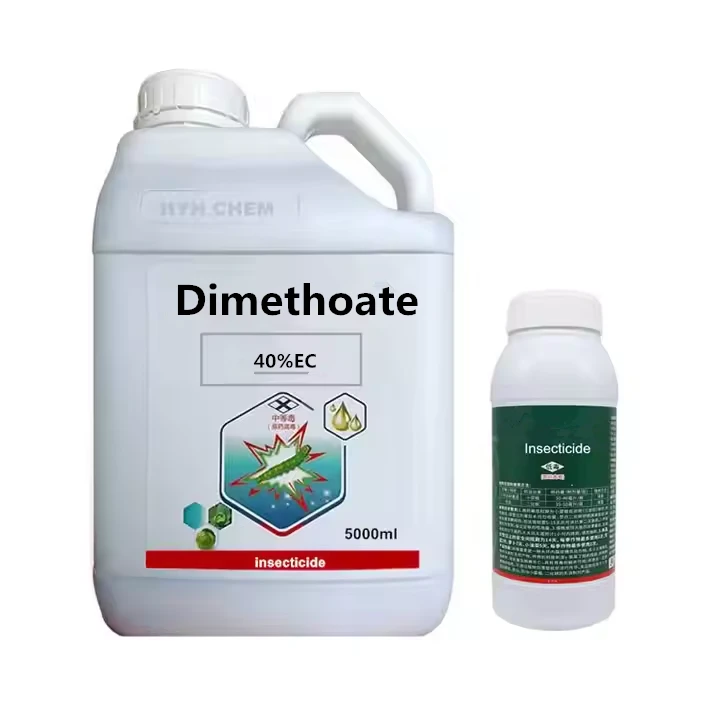
Now, let's talk about some other insecticides that are also commonly used in agriculture. You might be interested in Dimethoate Omethoateo - dimethyl S - methylcarbamoylmethyl 1113 - 02 - 6. This is another well - known insecticide that has been used for many years to control a wide range of pests. It has its own set of properties and half - life characteristics in soil, which can be quite different from Dinotefuran.
Another option is Insecticide Indoxair Conditioningarb 30% SC CAS No 144171 - 61 - 9. This insecticide is popular for its broad - spectrum activity against pests. Its half - life in soil is also influenced by similar factors as Dinotefuran, but again, the exact values can vary.
And then there's Emamectin Benzoate 155569 - 91 - 8. This is a bio - insecticide that's derived from a natural product. It's known for its relatively low environmental impact and specific mode of action against pests.

As a supplier of Dinotefuran, I'm always here to provide you with the best quality product and the information you need to make informed decisions. Whether you're a large - scale farmer or a small - scale gardener, having the right insecticide and using it correctly is crucial for successful pest control.
If you're interested in purchasing Dinotefuran or have any questions about its use, half - life, or any other related topics, don't hesitate to get in touch with me. We can have a detailed discussion about your specific needs and how Dinotefuran can fit into your pest control strategy.
In conclusion, the half - life of Dinotefuran in soil is a complex but important topic. By understanding the factors that affect it and how it relates to pest control and environmental safety, we can make better use of this valuable insecticide. So, if you're in the market for an effective and reliable insecticide, give Dinotefuran a try.
References
- "Neonicotinoid Insecticides: Environmental Fate, Toxicity, and Implications for Honey Bee Health" - Journal of Economic Entomology
- "Pesticide Degradation in Soil: Principles, Factors, and Modeling" - Springer


